The glass harmonica, for which Mozart wrote the Adagio in C major, KV 356, produced an ethereal silvery sound by rotating glass bowls touched by fingers.
Composition History
The Adagio in C major, KV 356, was likely written for Marianne Kirchgeßner, a young blind virtuoso of the glass harmonica, for a concert in Vienna in 1791.
Performer Biography
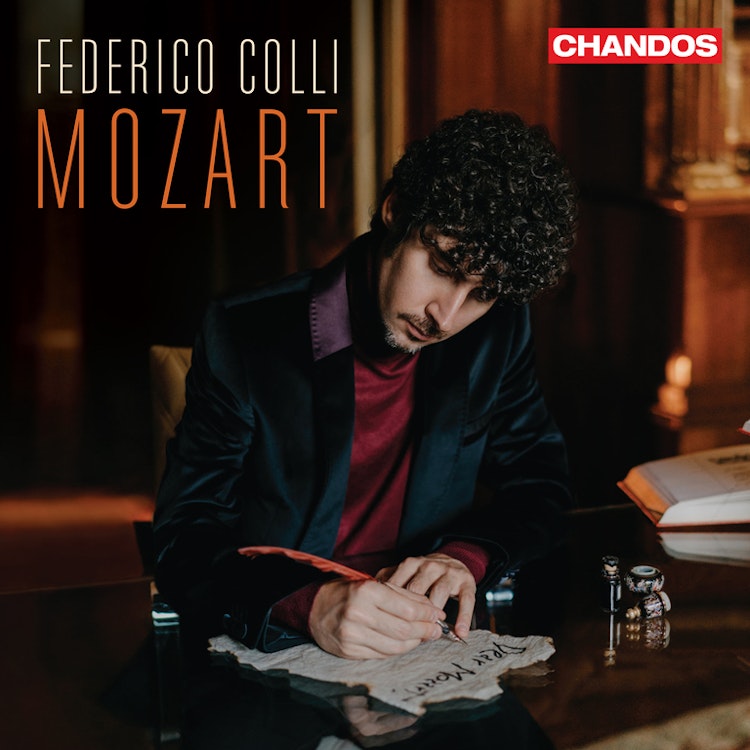
Pianist Federico Colli won First Prize at the International Music Competition Mozart in Salzburg in 2011 and the Gold Medal at the Leeds International Piano Competition in 2012.
Recording & Production
This album was recorded using 24-bit / 96 kHz technology, which offers a dynamic range up to 48 dB greater and 256 times the resolution of standard 16-bit recordings.
Composer's Artistic Vision
Mozart considered Carl Philipp Emanuel Bach, a German composer, his musical 'father', stating that those who could compose well learned from him.
Composition History
The Fantasie in C minor, KV 396, was originally an unfinished movement for piano and violin, with the violin part being so insignificant that it was omitted in the first publication.
Composer Biography
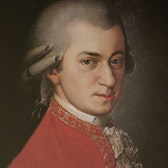
Wolfgang Amadeus Mozart's music is noted for its balance and wholeness, embodying the virtues of classical architecture, art, and rhetoric.
You might also enjoy...
Mordecai Shehori Plays Mozart, Vol. 1
Reflections On Mozart
Mozart: Piano Sonatas Nos. 9, 14 & 17/Fantasy in C minor/Adagio in B minor