Georg Muffat, a truly European composer, studied music with Jean-Baptiste Lully in Paris from age ten to sixteen.
Compositional Technique
Muffat's sonatas combine elements of the church sonata (sonata da chiesa) with dance movements found in chamber sonatas, such as Bourrée, Balletto, Arias, Rondeau, and Passacaglia.
Interpretation
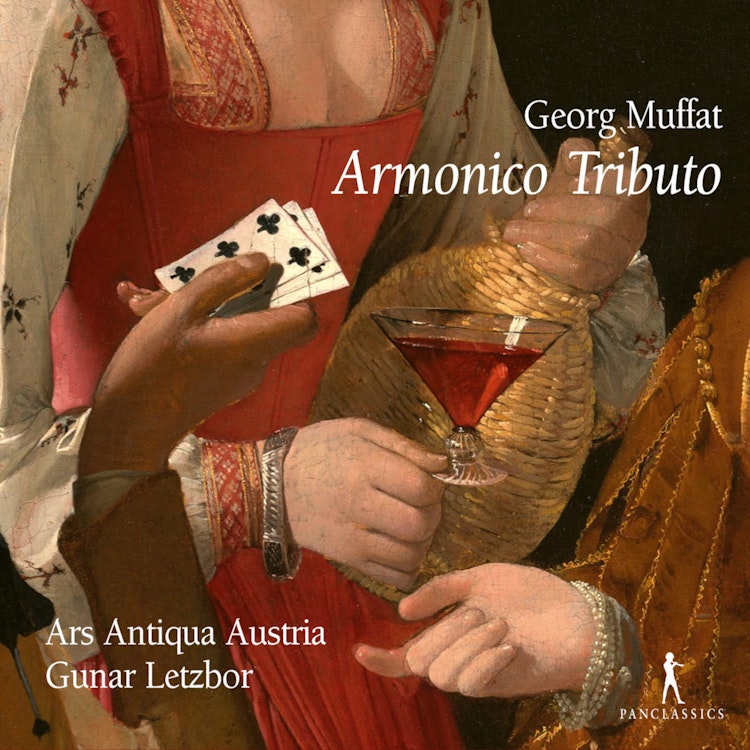
For this recording, the performers, Ars Antiqua Austria, chose to present a version of Armonico Tributo for five soloists.
Composer Biography
Muffat, while serving the Archbishop of Salzburg, Maximilian Gandolph, studied in Rome with Bernardo Pasquini, a leading harpsichord and organ virtuoso.
Composition History
Armonico Tributo, published in 1682, is considered one of the first works in the concerto grosso genre, alongside Corelli's Opus VI.
Compositional Technique
The instrumentation of Armonico Tributo is open, allowing performers to use as few as three instruments or an entire orchestra divided into concertino and concerto grosso groups.
Composition History
Muffat's Armonico Tributo was inspired by his encounter with Arcangelo Corelli and his Concerti Grossi in Rome.