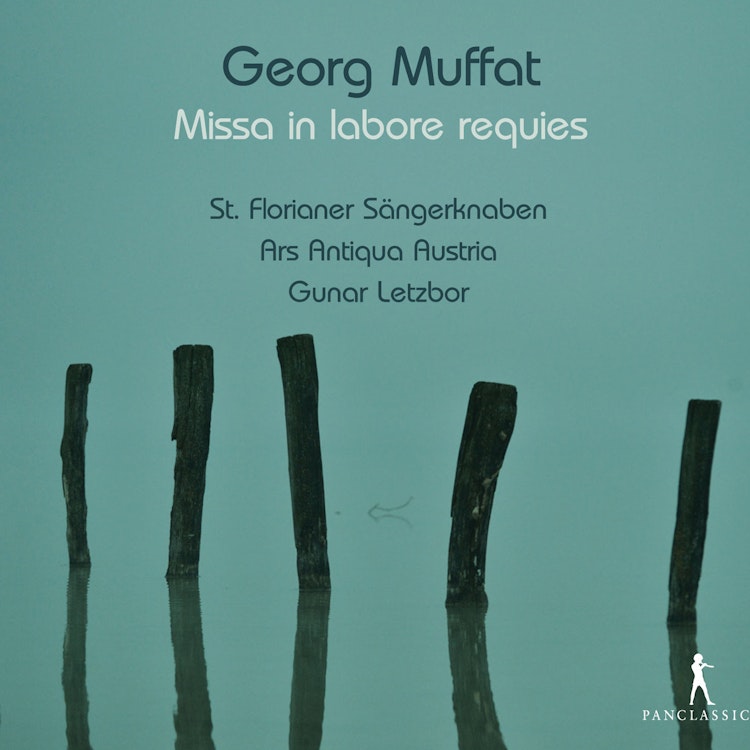
The Missa in Labore Requies is the only surviving ecclesiastical music by Georg Muffat, despite his successor Aufschnaiter reporting that Muffat regretted on his deathbed leaving behind only three Masses.
Recording & Production
This recording was made in Gurk Cathedral, chosen for its ideal acoustics that reflect the conditions of Salzburg, allowing for experimental placement of the five choirs and continuo group.
Composer's Artistic Vision
Georg Muffat expressed a political vision of harmonious coexistence among all peoples, stating that he combined French, German, and Latin styles not to make war, but to play for peace.
Composer Biography
Georg Muffat, the composer, was born in Savoy, spent his childhood in Alsace, studied in Paris, and later fled to Vienna and Prague during the Franco-Austrian War.
Compositional Technique
Muffat's Missa in Labore Requies features a multi-choral design, following the tradition of Salzburg and Passau Festive Masses, with special effects and rich instrumentation.
Compositional Technique
The Mass makes virtuoso demands on the two zink players and requires strings to play in high registers, which was typically reserved for soloists in Muffat's time.
Historical Context
The Salzburg archbishops, Johann Ernst and Max Gandolph, designed the Salzburg cityscape and its newly built Baroque cathedral with Italian baroque formal ideas, including architectural features for multi-choral music.
You might also enjoy...
Beethoven: Missa solemnis (Recorded 1999)
J.S. Bach: Mass In B Minor
Bach: Mass in B minor
Jan Dismas Zelenka: Missa Circumcisionis ZWV 11
Zelenka: Missa Omnium Sanctorum (Music from the Dresden Hofkirche)