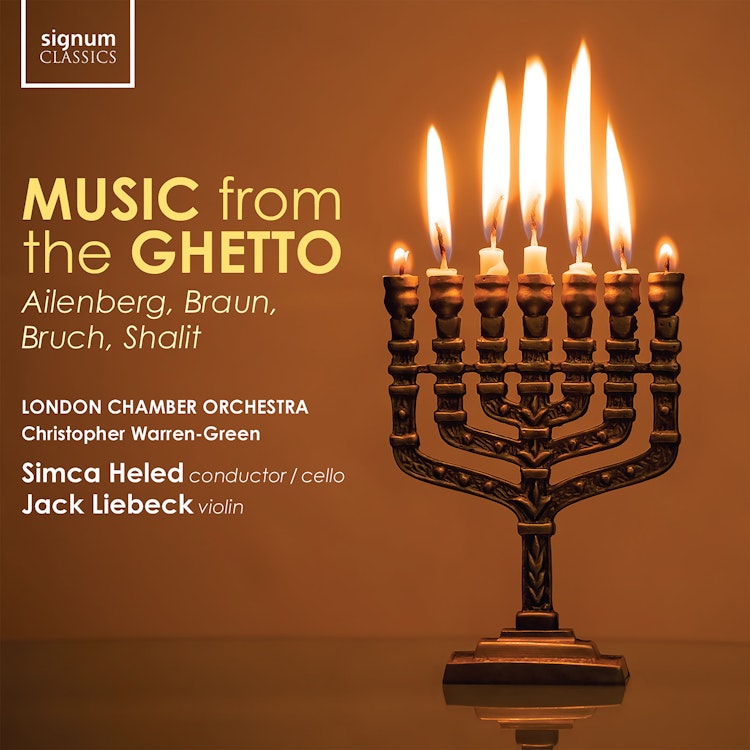
Music from the Ghetto: Ailenberg, Braun, Bruch, Shalit
6/23/2023, 9 Tracks, 59:56
Featuring
Christopher Warren-Green
Simca Heled
Jack Liebeck
London Chamber Orchestra
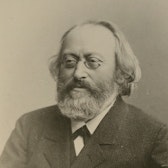
Max Bruch
Daniel Shalit
Yehezkel Braun
Leib Ailenberg
Did you know?
1/7
Composer's Artistic Vision
The composers on this album integrate Jewish musical traditions into Western European musical structures, expressing emotions like contemplation, mourning, hope, and the trauma of persecution and exile.
Composer Biography
Max Bruch, a 19th-century German composer, was fascinated by non-German music, including Celtic, Scottish, Swedish, Russian, and Hebrew folk material, despite his conservative German musical tradition.
Composition History
Max Bruch's Kol Nidrei, subtitled an Adagio on two Hebrew melodies for cello and orchestra, was inspired by his association with Cantor Abraham Lichtenstein, who introduced Bruch to the Kol Nidrei melody.
Performer Biography
Simca Heled, the cellist and conductor on this album, was nominated Leader of the Cello Section of the Israel Philharmonic Orchestra by Zubin Mehta at age 24, making him the youngest to hold that position.
Performer Biography
Jack Liebeck, the violinist on this album, is the Royal Academy of Music's first Émile Sauret Professor of Violin and the Artistic Director of the Australian Festival of Chamber Music.
Recording & Production
The London Chamber Orchestra, founded in 1921, is the UK's first professional chamber orchestra and has commissioned and performed UK premieres by composers such as Stravinsky, Vaughan Williams, and Prokofiev.
Album & Artwork
The central theme of this album is the assimilation of Jewish music elements, drawing from Chassidic folk traditions or religious worship.
You might also enjoy...
Walton: Cello Concerto / Partita / Improvisations On an Impromptu of Benjamin Britten / Passacaglia
Lyric Concerto
The Spirit of England
Ibert: Orchestral Works
De Profundis
Balada: Cello Concerto No. 2 / Concerto for Four Guitars / Celebracio