The Peterhouse Partbooks are believed to have been copied for Canterbury Cathedral, a significant religious center in England, by Thomas Bull, a lay-clerk and music copyist.
Composition History
More than half of the seventy-two compositions in the Peterhouse Partbooks do not exist in any other sources, making them unique to this collection.
Composition History
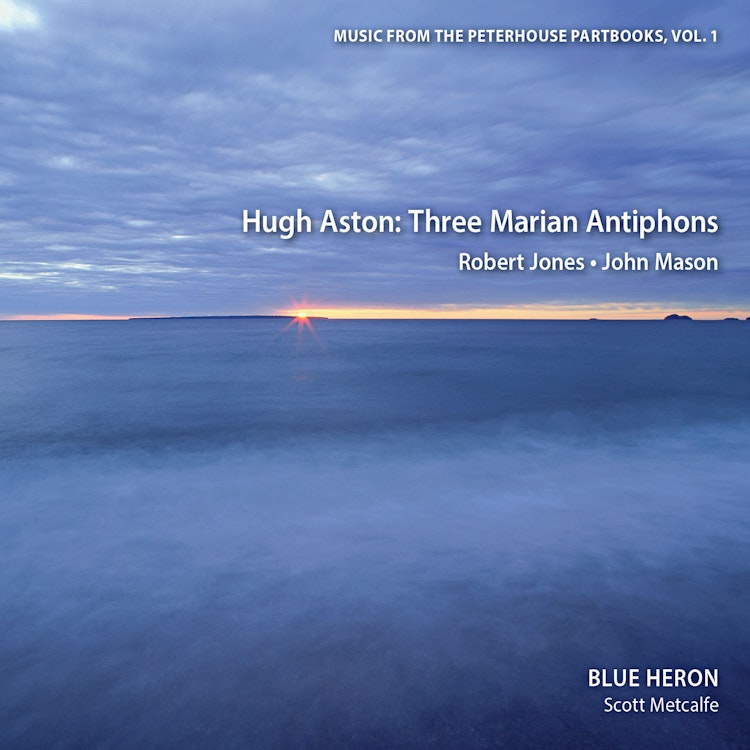
The music on this album comes from the Peterhouse Partbooks, a collection of music dating from the end of Henry VIII's reign, around a hundred years before Peterhouse College had its own chapel.
Interpretation
Blue Heron, the ensemble on this recording, performs with three women singing the treble parts instead of boys, and uses a total of twelve singers, mostly two to a part, for a balanced sound.
Composition History
The Peterhouse Partbooks were originally a set of five books, but the tenor partbook is now missing, and pages are lost from the treble book, rendering two-thirds of the repertory unperformable in its surviving state.
Compositional Technique
Nick Sandon, a musicologist, has restored the incomplete pieces from the Peterhouse Partbooks by recomposing the missing voices, a practice that was once viewed with suspicion.
Historical Context
The Peterhouse Partbooks are considered the most important surviving source of English church music just before the Reformation, containing a large and varied repertory of five-part polyphony.
You might also enjoy...
Grandi - Sacri Concerti
O gente brunette
Barbireau: Missa Virgo Parens Christi
Frye: Trinitatis dies
Di Lasso: Choral Works
Gregorian Chant - Sequences
Gregorian Chant - Sequences
Gesualdo: Responsoria
Vocal Music (16Th Century Spanish) - Brudieu, J. / Fletxa, M. / Alberch, P. (Madrigals and Ensaladas From 16Th Century Catalonia) (La Colombina)
Gregorian Chant from St. Gall, Vol. 1
Gregorian Chant And Medieval Polyphony (L'Arbre De Jesse)