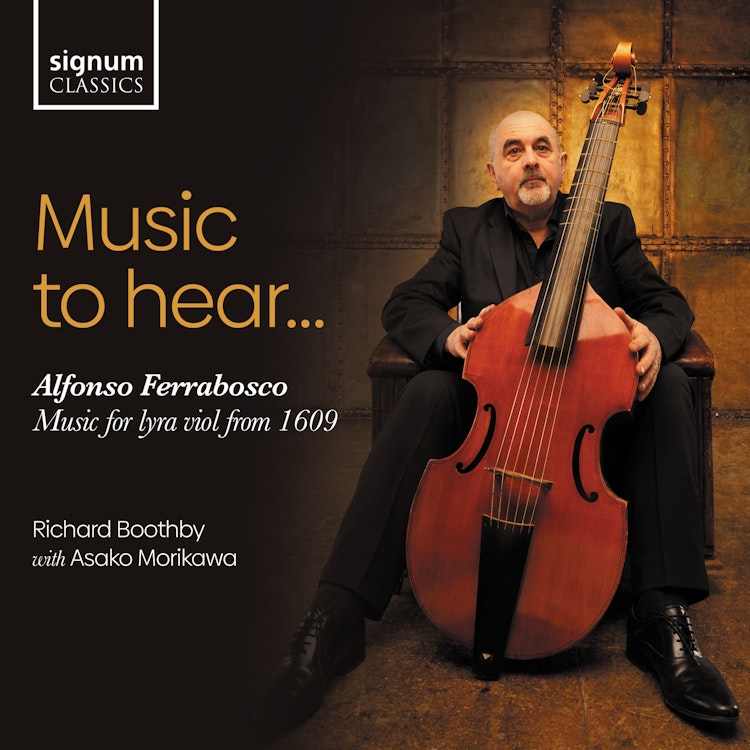
Music to Hear... Alfonso Ferrabosco: Music for Lyra Viol from 1609
6/2/2023, 13 Tracks, 53:50
Featuring
Asako Morikawa
Richard Boothby
Alfonso Ferrabosco the younger
Did you know?
1/7
Instruments
The lyra viol is a unique instrument, style of playing, and genre of instrumental music, with its largest repertory coming from England.
Performer Biography
Richard Boothby, a viola da gamba player, co-founded The Purcell Quartet and Fretwork, and has enriched the viol consort repertoire with new music from composers like Elvis Costello and George Benjamin.
Composer Biography
Alfonso Ferrabosco, despite his Italian-sounding name, was born in Greenwich, England, and never left the country, unlike his father, who was also a composer.
Compositional Technique
Lyra viol music was written in tablature, a six-line notation system, because most of the music used 'scordatura' (de-tuning of the viol), with over 60 different tunings recorded.
Composition History
Ferrabosco's lyra viol works were published in the same year as Shakespeare's Sonnets (1609), and both had Henry Wriothesley, Third Earl of Southampton, as a dedicatee.
Instruments
Early lyra viols sometimes featured metal sympathetic strings beneath the gut strings, designed to resonate and enhance the sound, a concept Francis Bacon discussed in 1627.
Historical Context
The lyra viol appeared around the turn of the 16th century, first evidenced in Ben Jonson's 1600 play 'Cynthia's Revels', where it was described as an instrument able to 'infuse souls'.