Mussorgsky: St. John's Night on Bald Mountain & Songs and Dances of Death - Prokofiev: Alexander Nevsky
6/16/2017, 12 Tracks, 1:14:55
Featuring
Dmitri Kitajenko
Vladislav Sulimsky
Agunda Kulaeva
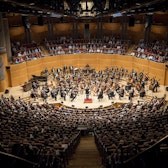
Gürzenich-Orchester Köln
Czech Philharmonic Choir Brno
Modest Mussorgsky
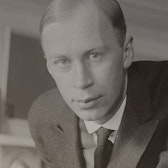
Sergei Prokofiev
Did you know?
1/7
Composition History
Modest Mussorgsky's original orchestral fantasy, "St. John's Night on Bald Mountain," was completed on the eve of June 23, 1867, but was never performed during his lifetime.
Compositional Technique
In his song cycle "Songs and Dances of Death," Modest Mussorgsky oriented his melodic language on the rhythm of speech, which he considered the only appropriate and realistic approach.
Performer Biography
Dmitrij Kitajenko, the conductor on this album, was a prize winner at the First International Herbert von Karajan Conducting Competition in Berlin in 1969 and became Principal Conductor of the Stanislavsky Theatre in Moscow at just 29 years old.
Composer's Artistic Vision
Mussorgsky was part of 'The Mighty Five' (Mogučaya kučka), a group of composers including Mily Balakirev, Cesar Cui, Alexander Borodin, and Nikolai Rimsky-Korsakov, whose ideal was a Russian national music free from Western influences and academic formalism.
Historical Context
Sergei Prokofiev's "Alexander Nevsky" cantata is based on the 1938 film of the same name, which depicted the 13th-century battle of Alexander Nevsky against the Teutonic Knights, a historical parallel relevant to the Soviet Union's concerns about Hitler's 'drive to the East' before WWII.
Composition History
The collaboration between film director Sergei Eisenstein and composer Sergei Prokofiev for the film "Alexander Nevsky" was so close that some film sequences were created to fit Prokofiev's already composed music, a novelty in filmmaking at the time.
Recording & Production
The Gürzenich Orchestra Cologne and conductor Dmitrij Kitajenko have a long-standing collaboration, with their complete recordings of Prokofiev and Shostakovich symphonies receiving multiple awards.
You might also enjoy...
Grieg: Complete Music with Orchestra
Sibelius: Spirit of Nature (Luonnotar)
Lokshin: Les Fleurs du mal
In the Stream of Life: Songs by Sibelius
Blech: Complete Orchestral Works
Renata Tebaldi: Christmas Festival
Wolf: Italian Serenade; Penthesilea; Lieder
Stenhammar: Sangen (The Song) / 2 Sentimental Romances / Ithaka