Szymanowski's Mythes, Op. 30, includes quarter tones on the fourth string of the violin, which was likely the first instance of their use in violin literature.
Composer Biography
Erich Wolfgang Korngold, an Austrian composer, remained in Hollywood after Austria's annexation by Nazi Germany in 1938 due to his Jewish faith, and felt rejected by his home city of Vienna.
Composition History
Sergei Prokofiev's Five Melodies, Op. 35b, were originally composed in 1920 as Songs without Words, Op. 35, for soprano Nina Koshetz, a Ukrainian-born singer.
Composer Biography
Olivier Messiaen, a French composer, became a German prisoner of war in 1940 and was interned for several months in a camp near Görlitz.
Composition History
Maurice Ravel's Pavane pour une infante défunte was arranged for violin and piano by Paul Kochanski, a Polish violinist, in 1927, long after its original publication as a piano piece in 1898.
Performer Biography
Violinist Stefan Hempel plays a violin made by Nicolò Gagliano, a renowned Italian luthier, from Naples, dating to approximately 1760.
Historical Context
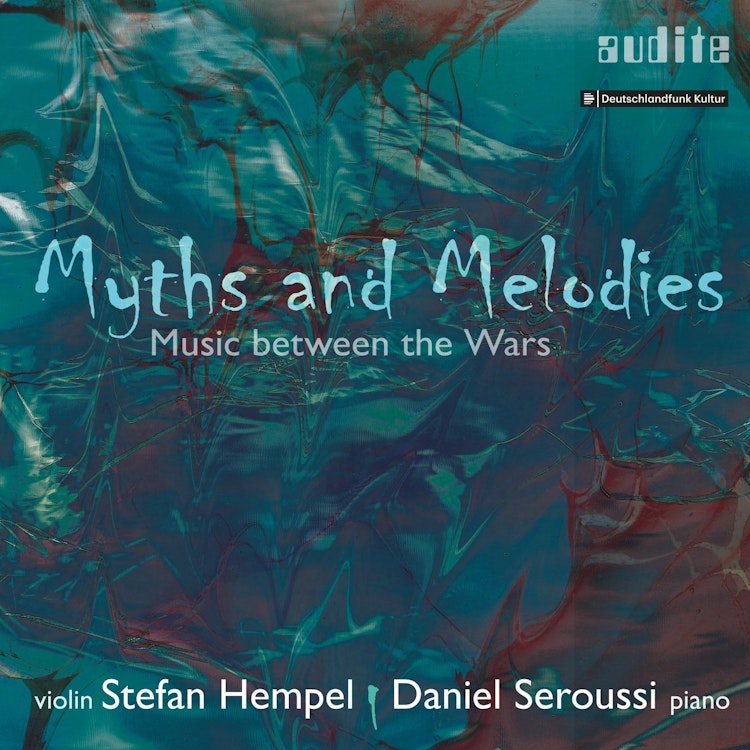
The composers on this album—Ravel, Prokofiev, Szymanowski, Messiaen, and Korngold—were directly confronted with the political upheavals of the 'black' twentieth century, including revolution, war, exile, and totalitarian rule.
You might also enjoy...
La voix
Wieniawski: Works for Violin & Piano
Ivry Gitlis in Verbier
Live from the 2010 International Violin Competition of Indianapolis
De Freitas: Complete Music for Violin
Works for Violin & Piano
Vieuxtemps: Music for Violin & Piano
Poulenc, Prokofiev, Stravinsky, Debussy
Vignettes for Violin
Bartok, B.: Rhapsody No. 1 / Janacek, L.: Violin Sonata / Ravel, M.: Violin Sonata in G Major (The Roaring Twenties)