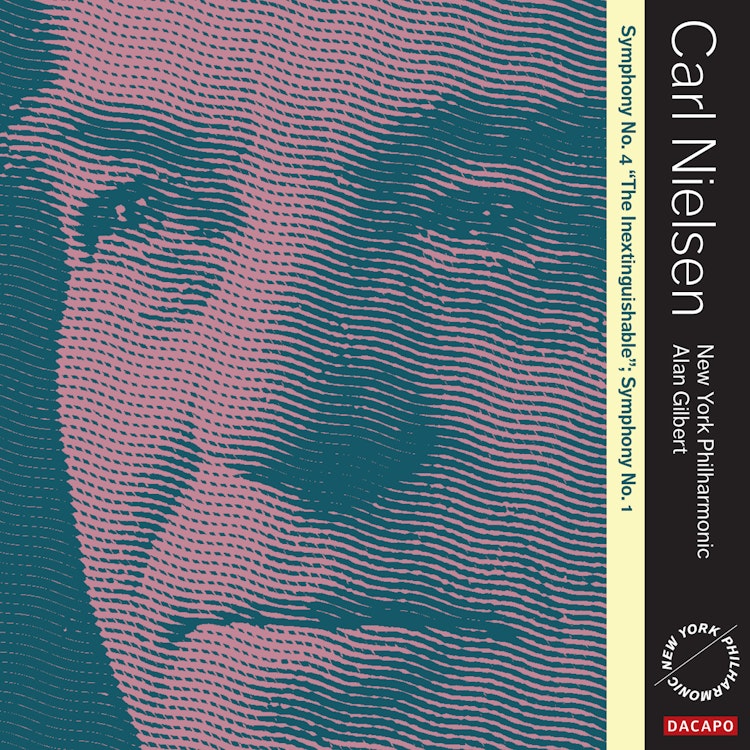
Carl Nielsen viewed his Symphony No. 4 as an expression of the 'Life Urge' or 'Life Expression' – everything that moves and has the will to life, stating, 'Music is life, and like it inextinguishable.'
Composer's Artistic Vision
Carl Nielsen's music is characterized by polarities of tradition and modernism, popularity and experiment, and the playful and the brutal, making him a unique early modernist composer.
Composition History
Carl Nielsen's Symphony No. 4, 'The Inextinguishable,' was premiered in 1916 amidst World War I, and its intense music can be heard as a reflection of the war or his dramatic separation from his wife, Anne Marie.
Composer Biography
At 14, Carl Nielsen worked as a regimental musician, but benefactors in Odense helped send him to Copenhagen, where he was admitted to the Academy of Music.
Composer Biography
Carl Nielsen, born in 1865, grew up in poverty on the island of Funen, learning violin and trumpet from his father, a village painter and folk musician.
Compositional Technique
Carl Nielsen's Symphony No. 1 breaks conventions by ending in a different key from its beginning, pulling towards C major from its main key of G minor.
Performer Biography
Alan Gilbert, the Music Director and Conductor for this album, is the first native New Yorker to hold the position of Music Director for the New York Philharmonic.
You might also enjoy...
Tchaikovsky: Symphony No. 6 in B Minor, Op. 74 "Pathétique"
Rubinstein: Symphony No. 4, 'Dramatic'
Ultimate Classics - Berlioz: Fantasy Symphony
Berlioz: Symphonie fantastique
Rachmaninoff: Symphony No. 3 in A Minor, Op. 44
Rachmaninoff: Symphony No. 2 in E Minor, Op. 27
Nielsen: Symphonies Nos. 3 & 4
Tchaikovsky: Symphony No. 6 in B Minor, Op. 74 "Pathétiqe"
Gade, N.: Symphonies Nos. 4 and 6
Rachmaninoff: Symphony No. 2 in E Minor, Op. 27
Nielsen: Symphony No. 2, Op. 16 "The Four Temperaments"