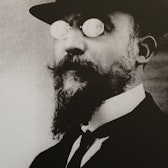
Noriko Ogawa Plays Erik Satie on an 1890 Erard Piano
6/2/2017, 50 Tracks, 1:15:22
Featuring
Noriko Ogawa
Erik Satie
Did you know?
1/7
Composition History
Erik Satie was appointed 'maître de chapelle' (exclusive composer) for Joséphin Péladan's 'Catholic Rosy Cross of the Temple and the Grail' movement, composing works for their rituals.
Compositional Technique
During his time with the Rose+Croix, Satie abandoned key signatures and bar lines, and began to add eccentric, ironic performance indications to his scores that were not meant to be read aloud.
Instruments
Noriko Ogawa performs on an 1890 Érard Grand Piano No. 69351 for this recording.
Composer Biography
Erik Satie, the composer, was a friend of symbolists, occultists, Dadaists, and surrealists, and anticipated postmodernism, musical ready-mades, and ambient music.
Compositional Technique
Satie's Sarabandes, which take their name from a 17th-century dance, can be considered studies in chords, with bold successions of seventh and ninth chords that anticipate Debussy, Ravel, and even jazz pianists.
Composition History
Satie's Three Sarabandes, composed in September 1887, are among his earliest works and predate his famous Gymnopédies by a few months.
Composition History
The collection Sports et divertissements was originally commissioned by Lucien Vogel, editor of a Parisian fashion magazine, for Igor Stravinsky, who refused it due to low payment.
You might also enjoy...
Schmitt: Works for Piano
Poulenc: Piano Music, Vol. 1
Satie: Piano Music
Messiaen: Vingt Regards sur l'Enfant Jésus
Satie: 3 Gymnopédies - 6 Gnossiennes
Tchaikovsky: The Nutcracker - Rachmaninov: Five Preludes