Zoltán Kodály, the Hungarian composer, made a profound study of folk music throughout his life, which permeates the musical language of his Cello Sonata.
Instruments
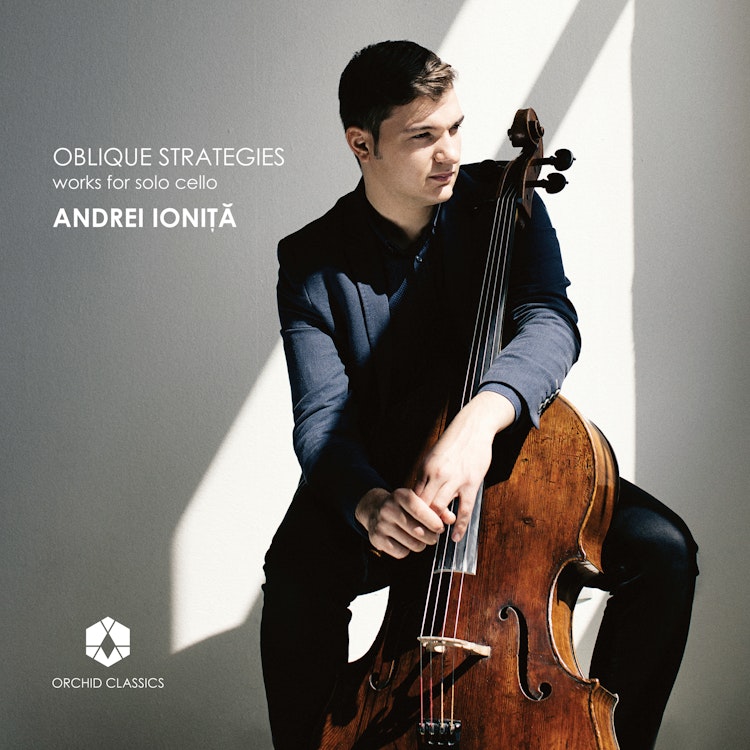
Andrei Ioniţă performs on a Giovanni Battista Rogeri violoncello, made in Brescia in 1671, which is on loan to him from the Deutsche Stiftung Musikleben.
Composition History
J.S. Bach's Cello Suites, including the first one on this album, are generally believed to have been composed between 1717 and 1723 while he was Kapellmeister for Prince Leopold of Anhalt-Köthen.
Compositional Technique
Bach's Cello Suites follow a standard structure: an opening prelude, followed by dance movements (Allemande, Courante, Sarabande, Gigue), with an additional pair of movements called Galanterie in between.
Compositional Technique
Zoltán Kodály's Sonata for solo cello uses scordatura, an unusual retuning technique where the two lowest strings are lowered to B and F sharp, reflecting the piece's B minor key.
Composer's Artistic Vision
Brett Dean's "Eleven Oblique Strategies" was inspired by a series of aphorism cards created by British musician Brian Eno and German-born British visual artist Peter Schmidt, intended to stimulate creativity.
Performer Biography
Andrei Ioniţă, the cellist on this recording, won First Prize at the 2015 International Tchaikovsky Competition and was a BBC New Generation Artist from 2016-2018.