The album features works where composers embroidered on others' compositions, a common practice until at least the mid-18th century, as seen in Bach's transcription of Marcello's Oboe Concerto.
Instruments
The recording features a viola da gamba by Jane Julier (1993) after Colichon (1693), a 'French' theorbo by Lars Jönsson (2011) with additions by Klaus Jacobsen (2019), and a Baroque guitar by Klaus Jacobsen (2014) after Stradivarius.
Historical Context
Before the 15th century, when paper was scarce, music was a significant medium for memorizing information, including languages and theological doctrine.
Performer Biography
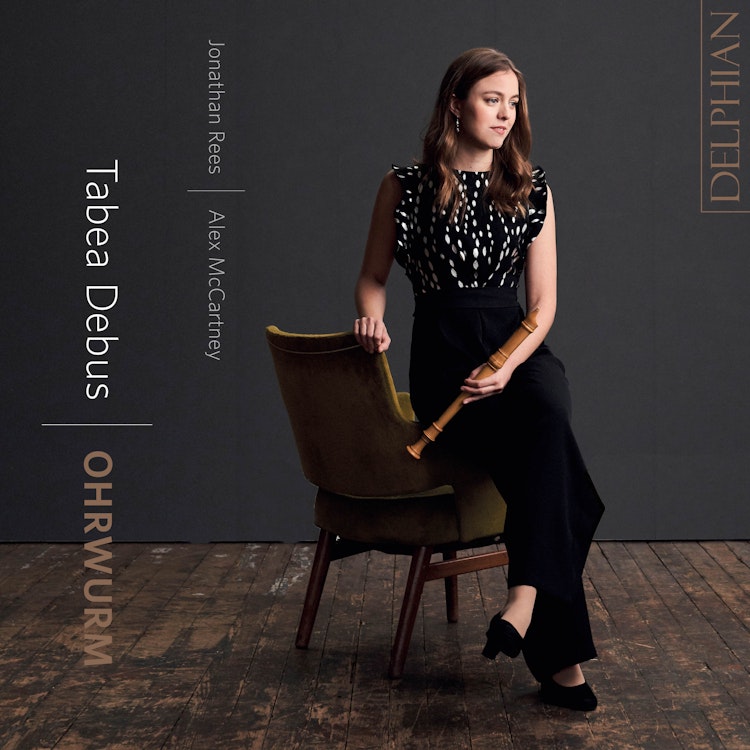
Tabea Debus, the recorder player, has a burgeoning career with an equal focus on contemporary and Baroque music, performing across Europe, Asia, Colombia, and the USA.
Composer's Artistic Vision
The album explores how tunes and dances became 'earworms' in 17th and 18th-century European music-making, influencing publishing, memory, and repetitive musical structures.
Album & Artwork
The album title, Ohrwurm, is German for 'earworm' and refers to tunes that get stuck in one's mind.
Recording & Production
This album is the inaugural release of a new partnership between Delphian Records and Young Classical Artists Trust (YCAT), aiming to provide recording opportunities for promising young artists.
You might also enjoy...
Mr Handel's Dinner
Mare Mediterraneum
Early Italian Chamber Music - Works for Recorder and Basso Continuo