A 1852 review in the Gazzetta Musicale di Milano noted that Morlacchi and Torriani's duo on Verdi themes achieved the desired effect, though it suggested a more artistic form for such compositions.
Historical Context
In 19th-century Milan, instrumental music, initially cultivated by aristocratic amateurs, later saw the enlightened bourgeoisie, like publisher Giovanni Ricordi, establish new musical associations.
Historical Context
Between 1845 and 1870, many instrumental music academies proliferated in Milan, cutting across all levels of Milanese society.
Performer Biography
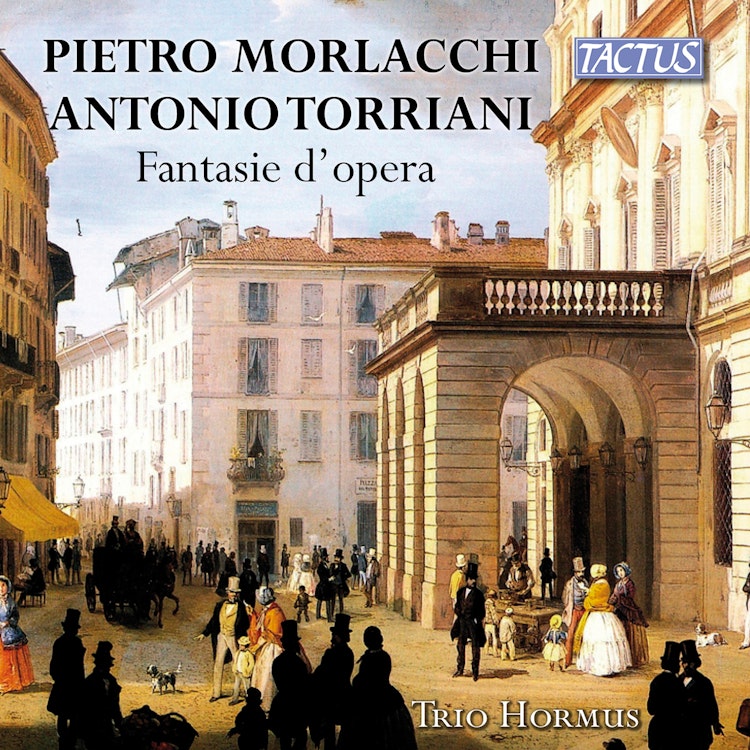
Trio Hormus, though recently formed in 2008, consists of three musicians with over twenty years of chamber-music collaboration, particularly within the 'Cecilian' milieu.
Cultural Impact
The market for amateur instrumentalists in Italy became enormous, as evidenced by the huge sum Ricordi paid for Lucca's publishing plates at the end of the 19th century.
Cultural Impact
The great opera-music fantasias, like those by Morlacchi on Mosè in Egitto and Torriani on Lucia di Lammermoor, were central to Milanese publishing and catered to a growing market of amateur instrumentalists.
Composer Biography
Pietro Morlacchi, flautist, and Antonio Torriani, bassoonist, were students when their joint composition, a virtuosic 'trio', premiered and impressed the public.