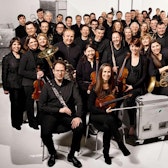
Carl Orff's "Carmina Burana" became a sensation in the 1950s and 1960s, catapulting him into the ranks of the most frequently performed living composers, despite being labeled "primitive" by some critics.
Composition History
Carl Orff's "Carmina Burana" of 1937 was his first work to showcase his fully developed style, which he considered his true "Opus 1" for "Welttheater" (world theatre), and he instructed his publisher to withdraw all earlier works.
Compositional Technique
"Carmina Burana" is a dramatic cantata that achieves its vital effect through primal rhythmic forces combined with simple melody and harmony, yet it features a sophisticated and richly contrasting sound with a large orchestra, two pianos, extensive percussion, mixed choir, boys' choir, and three solo singers.
Composer's Artistic Vision
Carl Orff, the composer, aimed for a return to elemental rhythms rooted in the magical and cultic origins of art, striving for a "Gesamtkunstwerk" (total art-work) that unified music, word, and movement, similar to the Ancient Greek concept of "mousiké."
Composer Biography
Carl Orff, the composer, was deeply influenced by Mediterranean humanism and a return to Latin and Ancient Greek, which for him and Günter Wand, provided a means of consolidating their attitudes during the Nazi regime.
Historical Context
The texts for "Carmina Burana" are from a 13th-century collection of about 200 songs in Latin and Middle High German, originally compiled by Benedictine monks from Benediktbeuern Monastery, which Carl Orff discovered in 1936.
Performer Biography
Günter Wand, the conductor, never conducted works he could not fully identify with, whether old or new music, throughout his 28 years as music director of the Gürzenich in Cologne and almost 20 years with the NDR Symphony Orchestra.
You might also enjoy...
Carmina Burana
Orff: Carmina Burana
Orff: Carmina Burana
Orff: Carmina Burana [Expanded Edition]
Orff: Trionfi
Stojowski: Suite for Orchestra, Le printemps & Prayer for Poland