Pierre Boulez, a visionary composer and astute music thinker, believed that great composers create a "history of destruction" by constantly questioning and renewing formal apparatus, even while loving the object they destroy.
Compositional Technique
Pierre Boulez's Second Piano Sonata implements a vision of "organized delirium," a music that "stands between order and chaos" and forces listeners to participate.
Album & Artwork
The album's concept, curated by Tamara Stefanovich, explores how composers between and after the World Wars engaged with the sonata form, using, abusing, enhancing, and reshaping it.
Critical Reception
The Paris premiere of Pierre Boulez's Second Sonata in April 1950 caused a significant scandal, contrasting with Hanns Eisler's Piano Sonata Op. 1, which was successful from the outset.
Instruments
Domenico Scarlatti, an Italian composer and virtuoso, was an early enthusiast of the 'cembalo col piano e forte' (the early piano) and composed over 500 sonatas for the hammer-struck keyboard instrument.
Composer Biography
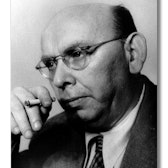
Hanns Eisler, a student of Arnold Schoenberg, dedicated his first published work, Piano Sonata Op. 1, to his mentor, humbly stating, "I owe you everything."
Historical Context
Writing a piano work titled 'Sonata' in the 1920s or around 1950 was an aesthetic statement, as the genre's underlying concepts, especially classical sonata form, were under scrutiny due to 20th-century musical language renewal.
You might also enjoy...
From the Archives. Hall. Tveitt. Grieg.
Concord (Live)
American Piano Music
Turina: Piano Music, Vol. 2
Schumann, Grieg, Brahms & Berg: Op. 1
Szymanowski, K: Sonatas 1, 2, 3 / Prelude and Fugue
Gianneo: Piano Sonatas Nos. 2 and 3 / 6 Bagatelles
Gianneo: Piano Sonatas Nos. 2 and 3 / 6 Bagatelles
Poulenc: Works for Piano Duo (Complete)
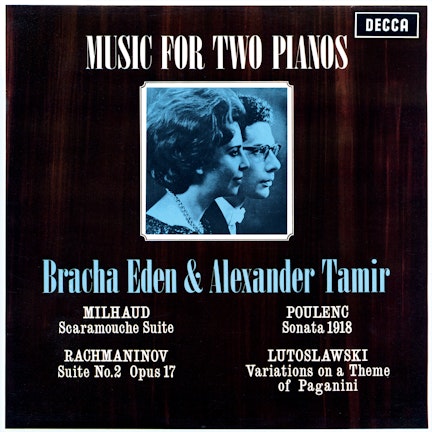
Music for Two Pianos - Milhaud; Rachmaninov; Poulenc; Lutoslawski