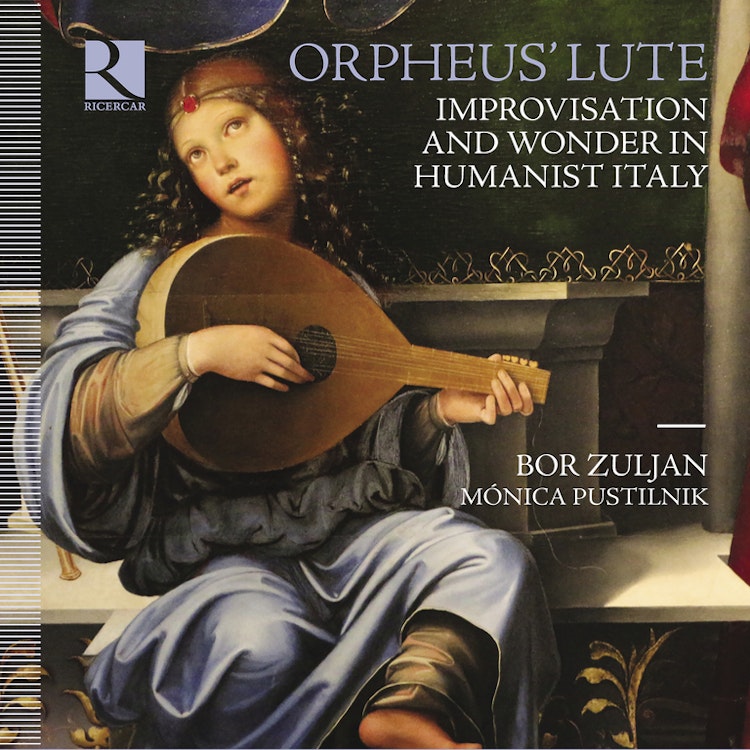
Orpheus' Lute. Improvisation and Wonder in Humanist Italy
11/15/2024, 27 Tracks, 1:01:42
Featuring
Bor Zuljan
Mónica Pustilnik
Joan Ambrosio Dalza
Johannes Ockeghem
Bartolomeo Tromboncino
Marco Dall'Aquila
Francesco da Milano
Antoine Busnois
Vincenzo Capirola
Giovanni Maria da Crema
Did you know?
1/7
Historical Context
Musical improvisation gained value in Europe for the first time with the rise of Humanism in the 15th century, influenced by the rediscovery of Plato's writings.
Compositional Technique
The terms 'ricercar', 'fantasia', and 'tastar de corde' for early 16th-century musical genres reflect their profoundly experimental nature and connection to improvisation.
Historical Context
Johannes Tinctoris, a renowned late 15th-century music theorist, described improvising lutenists like Pietrobono del Chitarrino, who could improvise an extra part with admirable melodic inventions.
Instruments
The lute's association with ancient mythological figures like Orpheus was encouraged by one of its Latin names, 'lyra', while 'testudo' recalled the tortoise shell used to construct the first lyre.
Composer's Artistic Vision
Florentine humanists, particularly Marsilio Ficino's circle, believed that divinity expressed itself directly through inspired poets and musicians.
Recording & Production
This album is a result of the research project "Fantaisie - Le pouvoir de la musique" by Bor Zuljan at the Haute École de musique de Genève.
Compositional Technique
Renaissance musical improvisation was intrinsically linked to written polyphonic music, using the same counterpoint rules as composition, and was carefully prepared through memorized formulas.
You might also enjoy...
A Suo Amico: Music from the repertoire of Domenico Dragonetti and Robert Lindley
X
X
Bach-Abel Society
Cunha: Responsorios para o oficio de Sexta-ferira Santa
Haydn: Baryton Trios, Cassation and Quintet
Fremer l'arpa ho sentito per via…
La Lira D'Esperia (La Vièle Médiévale / The Medieval Fiddle)
Nova
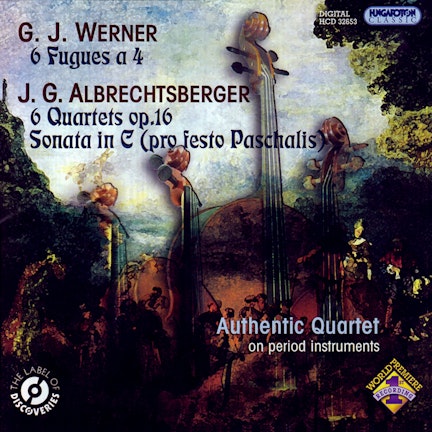
Fugues for String Quartet
Angst der Hellen und Friede der Seelen
Choral Concert: Studenter-Sangforeningen (Gaudeamus Igitur - Student Songs and Drinking Songs)