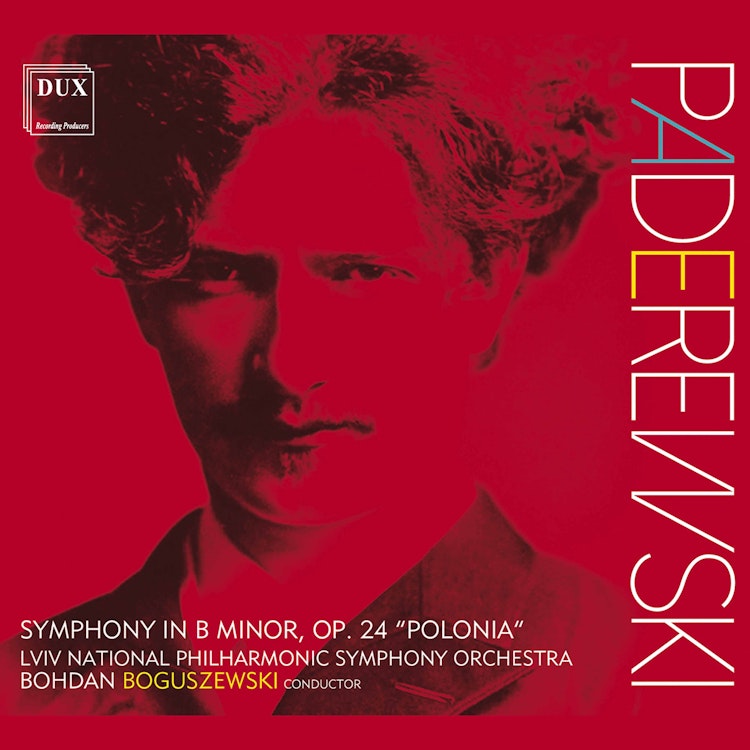
The Lviv National Philharmonic Symphony Orchestra's roots trace back to the early 19th century with Franz Xaver Mozart, Wolfgang Amadeus Mozart's son, who organized musical life and founded the St. Cecilia Choir Society in Lviv.
Interpretation
The conductor, Bohdan Boguszewski, ensured this recording faithfully reflects Paderewski's interpretive indications, including the use of three contrabass sarrusophones and a tonitruon.
Composition History
Paderewski composed his Symphony in B minor, Op. 24 'Polonia' to commemorate the 40th anniversary of the January Uprising, a Polish insurrection against Russian rule.
Compositional Technique
Paderewski's Symphony in B minor, Op. 24 features an original instrumentation, including an organ and two rare instruments: the sarrusophone and the tonitruon, a percussion instrument designed by Paderewski to imitate low, rustling sounds and thunder.
Recording & Production
This album was recorded in the Concert Hall of the Lviv National Philharmonic in August 2019.
Composer's Artistic Vision
Paderewski's musical language often symbolizes melancholy and longing for an independent and sovereign Poland, as seen in his Piano Sonata in E-flat minor and Piano Concerto in A minor.
Composer Biography
Ignacy Jan Paderewski, the composer, began his piano studies relatively late, at the age of 24, entering the Viennese class of legendary pianist and teacher Teodor Leszetycki.
You might also enjoy...
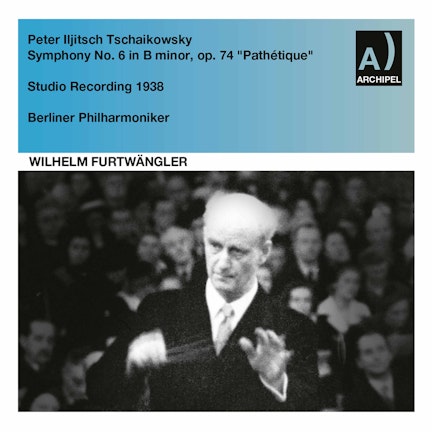
Tchaikovsky: Symphony No. 6 "Pathétique"
Tschaikowsky: Symphonie Nr. 6, 'Pathétique'
Tchaikovsky: Symphony No.6 "Pathétique"
Tchaikovsky: Symphony No. 6 in B Minor, Op. 74, TH 30 "Pathétique"
Tchaikovsky: Manfred Symphony
Tchaikovsky: Symphony No. 6 "Pathétique"
Borodin: Symphony No. 2 in B Minor — Conducted by Carlos Kleiber (Recordedd in 1972) and Erich Kleiber [Recorded 1947]