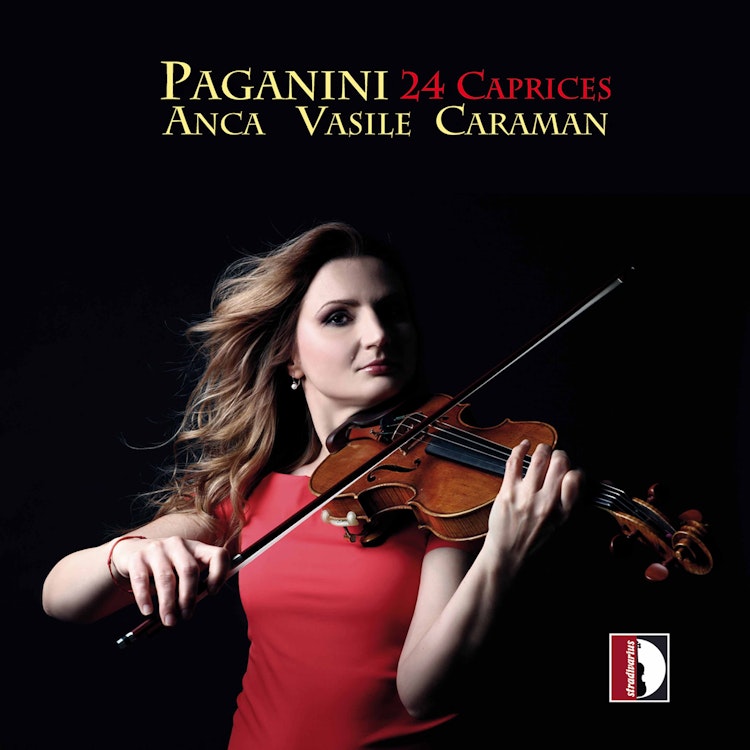
Paganini: 24 Caprices for Solo Violin, Op. 1, MS 25
7/16/2021, 24 Tracks, 1:20:15
Featuring
Anca Vasile Caraman
Niccolò Paganini
Did you know?
1/7
Composer's Artistic Vision
Paganini's Caprices were intended for exceptional artists of his caliber, pushing the boundaries of violin technique and expressivity.
Compositional Technique
The Caprices are virtuosically innovative, featuring every type of difficulty for both the bow (balzato, ricochet, chord jumps, picchettato) and the left hand (tenths, octaves, trills, pizzicati).
Composition History
Niccolò Paganini's 24 Caprices for violin, published around 1820 as his Opus 1, are considered the result of years of meditation and perhaps a single grand work.
Compositional Technique
Paganini's Caprices utilize a mixed form, allowing him freedom to incorporate counterpoint, harmony, operatic-inspired singability, imitation, and significant rhythmic and tonal variety.
Cultural Impact
Paganini's violin Caprices so impressed composer-pianists like Chopin and Liszt that they became models for their own concert studies, each presenting a new technical difficulty.
Composer Biography
Paganini's famously long, large, and hooked hands, which contributed to his violin technique, may have been due to Marfan syndrome, in addition to tireless practice.
Performer Biography
Anca Vasile Caraman, the violinist on this album, began studying violin at age 4 in Romania and has won 9 national and 3 international prizes, including the "Rovere d'Oro 2010" in the soloist category.
You might also enjoy...
Paganini: 24 Caprices
Rode: 24 Caprices for Solo Violin, Op. 22
Paganini: 24 Caprices
Paganini: 24 Caprices, Op. 1, MS 25
Paganini: 24 Caprices, Op. 1
Paganini: 24 Caprices, Op.1
Paganini: 24 Capricci
Paganini: 24 Caprices, Op. 1
Bacewicz: Polish Caprice
Paganini: 24 Caprices for Solo Violin, Op. 1, MS 25: No. 9 in E Major "La chasse". Allegretto
Paganini: 24 Caprices
Paganini: Caprices for Solo Violin (1950 Mono Recording)