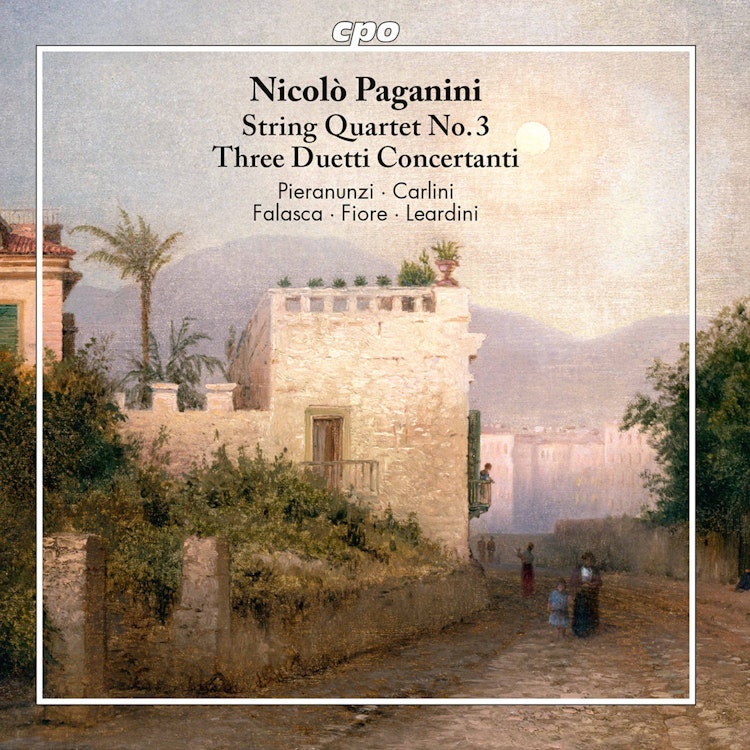
Paganini: String Quartet in A Minor, MS 20 No. 3 & 3 Duetti concertante, MS 130
9/3/2021, 11 Tracks, 1:14:39
Featuring
Gabriele Pieranunzi
Fabrizio Falasca
Francesco Fiore
Alessandra Leardini
Paolo Carlini
Niccolò Paganini
Did you know?
1/7
Composition History
Paganini composed his three string quartets in 1815 while at the court of Elisa Baciocchi in Lucca, where he was also studying the guitar.
Composer's Artistic Vision
Paganini greatly admired Ludwig van Beethoven and frequently played his quartets, demonstrating a cultural openness at a time when Beethoven's later works were not yet understood.
Composer Biography
Nicolò Paganini, the famous virtuoso, was also deeply interested in chamber music, often playing first violin in string quartets with trusted colleagues.
Compositional Technique
In the "Tre Duetti Concertanti," Paganini ensures both the violin and bassoon share the leading role, systematically exchanging parts and exploiting their technical and expressive qualities equally.
Compositional Technique
Paganini's string quartets blend the virtuoso dominance of the first violin, influenced by Italian instrumental traditions and Rossinian opera, with the sonata form of the Viennese Classicists.
Composer Biography
Paganini composed the "Tre Duetti Concertanti" at age 17 in Livorno for a Swedish amateur bassoonist who complained about not finding difficult music.
Composition History
The manuscript for Paganini's "Tre Duetti Concertanti for Violin and Bassoon" was rediscovered in 1990 among the papers of his only known pupil, Camillo Sivori.
You might also enjoy...
Paganini, N.: Centone Di Sonate for Violin and Guitar, Vol. 1
Duo: Itzhak Perlman & John Williams
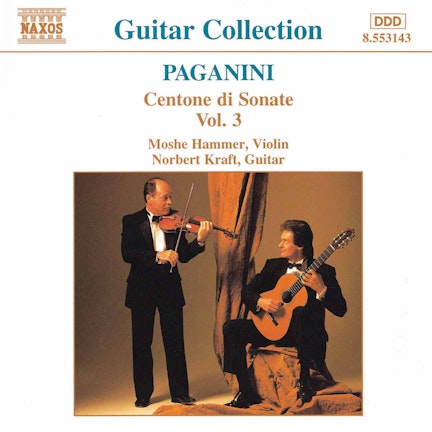
Paganini: Centone Di Sonate, Vol. 1
Paganini: Violin and Guitar Works
Paganini: Sonatas for Violin and Guitar
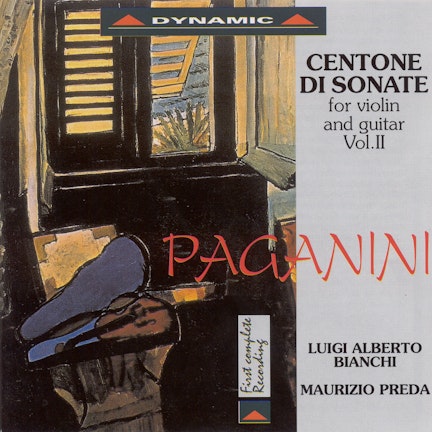
Paganini: Centone Di Sonate, Vol. 2
PAGANINI: Works for Violin and Guitar (Complete)
Giuliani, Paganini: Due Italiani a Vienna
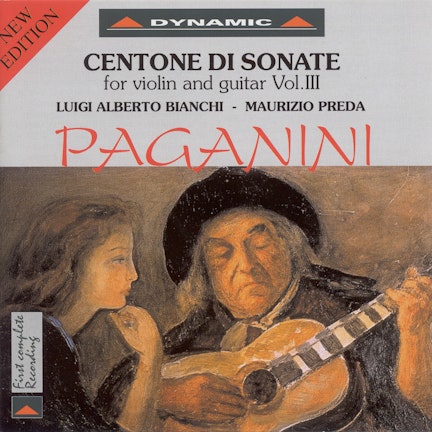
Paganini: Centone Di Sonate, Vol. 3
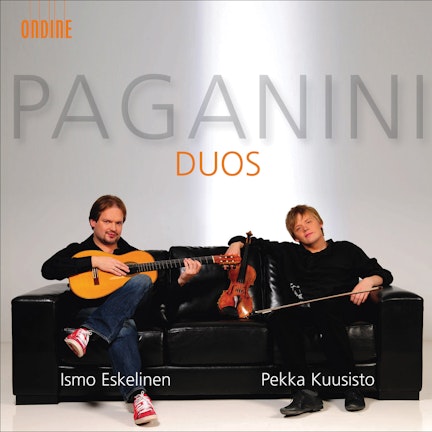
Paganini, N.: Duos
Paganini, N.: Centone Di Sonate for Violin and Guitar, Vol. 2
Paganini: Sonatas for Violin & Guitar
Paganini, N.: Centone Di Sonate for Violin and Guitar, Vol. 3
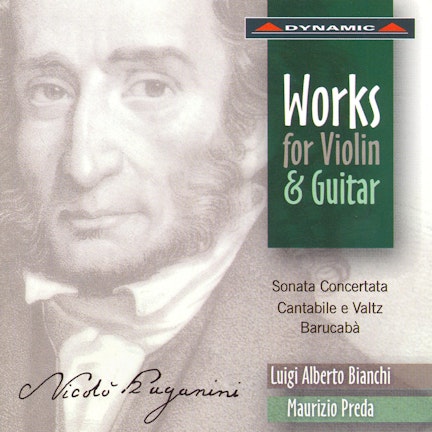
Paganini: Sonata Concertata / Cantabile E Valtz / 60 Variations On Barucaba