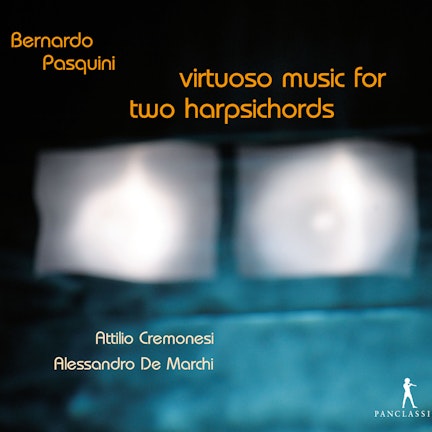
The Sonate a due cimbali were specifically drawn up by Pasquini for the musical education of his nephew, Bernardo Felice Ricordati, as indicated in the manuscripts.
Composition History
Pasquini compiled his keyboard works, including these sonatas, during the last twenty years of his life, partly to provide a complete instructional path for his nephew and pupil, Felice Bernardo Ricordati.
Compositional Technique
Pasquini's Sonate a due cimbali (sonatas for two harpsichords) reflect and transpose the violin 'style' of Arcangelo Corelli, a close collaborator of Pasquini, to two keyboards.
Interpretation
The performers on this recording, Marina Scaioli and Francesco Tasini, have deliberately deviated from the published edition in some passages, viewing the edition as a proposal for interpretation rather than a strict guide.
Composer Biography
Bernardo Pasquini, the composer, was known as the "immensely celebrated Apollo of Italy" and an "extraordinarily virtuoso" master of the organ and harpsichord.
Compositional Technique
Many of Pasquini's Sonate a due cimbali include implied references to dance forms characteristic of the 'Sonata da camera', such as the Giga and Minuetto.
Compositional Technique
The sonatas for two harpsichords show the influence of the Concerto grosso style, featuring echoes, dialogues, and repercussions between the two instruments.