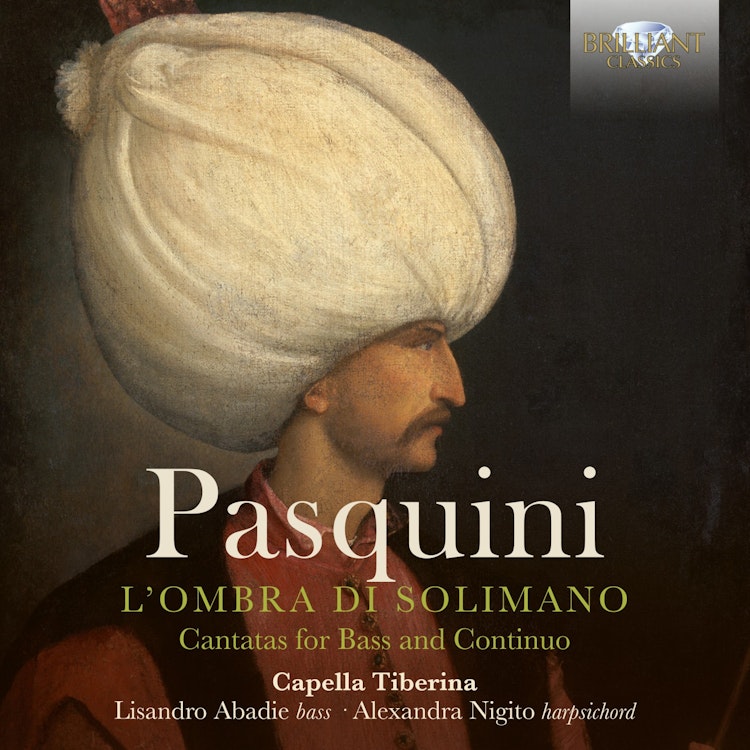
Pasquini: L'ombra di solimano, Cantatas for Bass and Continuo
4/29/2022, 13 Tracks, 1:11:01
Featuring
Alexandra Nigito
Lisandro Abadie
Domen Marinčič
Sam Chapman
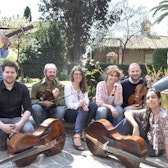
Capella Tiberina
Bernardo Pasquini
Did you know?
1/7
Composition History
The cantata 'Era risorta invano' ('L'ombra di Solimano') refers to the surrender of the Ottoman army after the Siege of Buda in 1686, taking the form of a lament by the ghost of Sultan Suleiman the Magnificent.
Composer Biography
Bernardo Pasquini, the composer, was in the service of the Borghese family in Rome from 1667, enjoying the patronage of Prince Giovanni Battista Borghese.
Recording & Production
This album was recorded on an antique harpsichord attributed to Mattia De Gand, kept in the Museo Santa Caterina in Treviso, to recreate the sound world of Prince Giovanni Battista Borghese's court.
Composer Biography
Many students from across Europe, including Georg Muffat and Francesco Gasparini, traveled to Rome to study with Bernardo Pasquini, whom Muffat called 'the very famous Apolline of Italy'.
Instruments
The harpsichord used for this recording is attributed to Mattia De Gand, an instrument maker active in Rome from 1695, and features a 53-note keyboard typical of central Italian harpsichords from 1660-1730.
Composer Biography
Bernardo Pasquini's fame was largely due to his skill at the harpsichord and organ, with contemporaries praising his playing as a sweet symphony.
Performer Biography
Capella Tiberina, founded by Alexandra Nigito, aims to highlight Italian Baroque repertoire, especially music from Rome, and performs on period instruments.
You might also enjoy...
Harpsichord Recital
C.P.E. Bach: Solo Keyboard Music, Vol. 40
Bach, J.S.: Toccatas (Complete)
Handel: Minuets for keyboard, HWV 497-557
Bach: The Toccatas for Harpsichord, BWV 910-916
Thomas Roseingrave: Harpsichord Suites
Bach: Toccatas, BWV 910 - 912; Fantasia and Fugue A Minor, BWV 904
Bach: Little Notebook for Anna-Magdalena Bach (Selections)