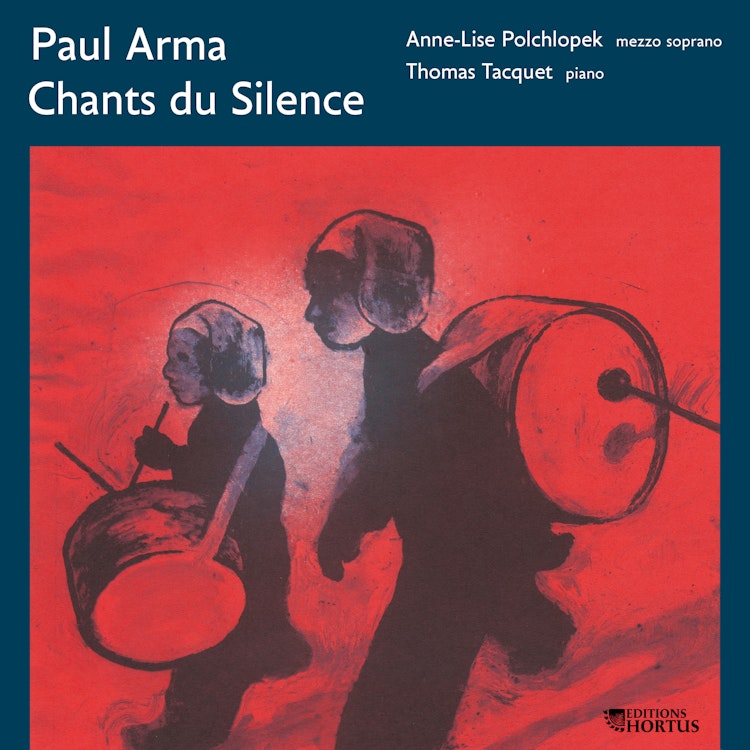
Paul Arma's revolutionary song "La commune d'Oviedo" became internationally popular, transforming into "No pasaran!" in 1937.
Composer Biography
Paul Arma's manuscripts, including his musical works, were burned by the SS in March 1933, forcing him to flee to France.
Recording & Production
This album, "Paul Arma, Chants du silence," is Anne-Lise Polchlopek's first disc of French melodies and was recorded in the Stephen Paulello Auditorium in Villethierry.
Composer Biography
Paul Arma, born Imre Weisshaus, was a pianist, a disciple of Béla Bartók, a communist activist, an assistant to Hanns Eisler, and a teacher at the Bauhaus.
Historical Context
Paul Arma, who was of Jewish origin and held revolutionary views, was expelled from the Franz Liszt Academy in 1924 due to antisemitism and fascism in Hungary.
Composer's Artistic Vision
Paul Arma's musical approach, influenced by his teachers Antal Molnár and Béla Bartók, was rooted in a love for musical folklore and a commitment to the fraternity of peoples.
Instruments
The recording was made using a Stephen Paulello Opus 102 piano in the Stephen Paulello Auditorium.
You might also enjoy...
Korngold: Complete Piano Sonatas
Reale: Piano Sonata No. 1 / Dance Sonata / Copland: Piano Blues Nos. 1-4 / Piano Fantasy
Berg: Piano Sonata, Op. 1 - Schoenberg: Three Piano Pieces, Op. 11 - Krenek: Piano Sonata No. 3, Op. 92, No. 4 - Gould Remastered
Berg: Piano Sonata, Op. 1 - Schoenberg: Three Piano Pieces, Op. 11 - Krenek: Piano Sonata No. 3, Op. 92, No. 4 - Gould Remastered
York Bowen: Piano Sonatas Nos. 1-6
Johann Ludwig Trepulka, Norbert von Hannenheim - Klavierstücke und Sonaten
Copland: Piano Sonata; Sessions: From My Diary; Kirchner: Piano Sonata; Rorem: Three Barcarolles
Alan Marks plays Modern Classics
Allen Sapp: Live Piano Works
Forsman: Piano Sonatas Nos. 1-5 / 5 Improvisations