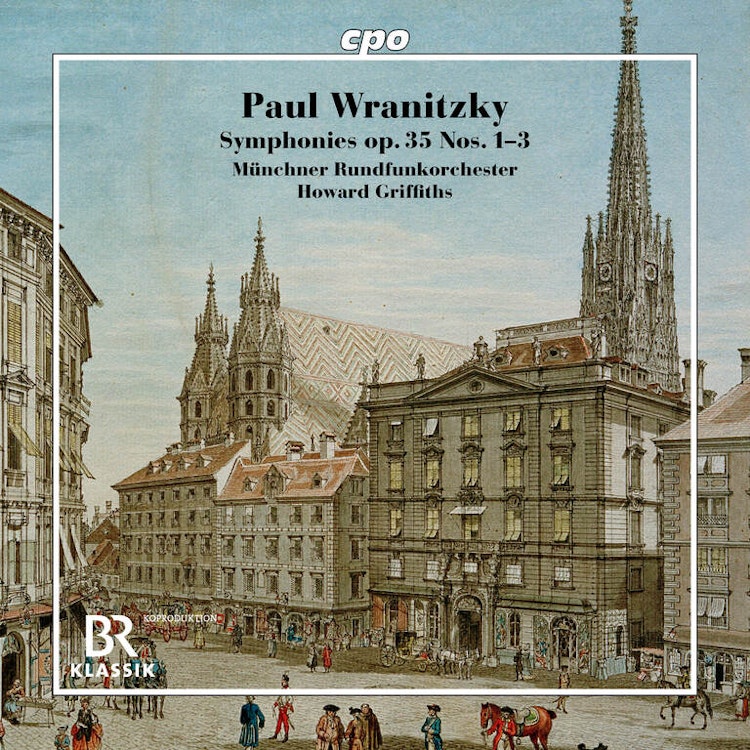
Paul Wranitzky's symphonies were among the most frequently performed in the German-speaking world during the 1790s, with over 50 performances at the Gewandhaus concerts in Leipzig alone between 1791 and 1804.
Compositional Technique
Paul Wranitzky's symphonies combine the unity of cyclical form with diversity in individual development, featuring slow introductions, sonata form first movements, and rondo-sonata final movements, while middle movements showcase a wide range of styles.
Critical Reception
The 1853 assessment by cultural historian Wilhelm Heinrich Riehl, which criticized Paul Wranitzky's symphonies, says more about the prevailing influence of Beethoven's symphonies than about Wranitzky's music itself.
Composer Biography
Paul Wranitzky, born in 1756, initially pursued studies in theology and was an excellent violinist before his interest shifted entirely to music.
Composer Biography
Despite his high reputation as a composer and orchestra conductor, Paul Wranitzky's financial situation was precarious, as his employment depended on theatre leaseholders, and his applications for a secure position in the Imperial Court Orchestra were rejected due to his exceptional qualifications.
Composer Biography
Empress Maria Theresa, the second wife of Emperor Francis II, was Paul Wranitzky's favorite symphonist, personally owning 16 of his symphonies, some of which were written specifically for her private concerts.
Performer Biography
Howard Griffiths, the conductor on this album, has released over 150 CD recordings, including first recordings of rediscovered 18th and 19th-century music, and has received awards such as 'Classic CD of the Year' for his work.