Wranitzky's symphonies follow Joseph Haydn's model in formal design and thematic construction, but incorporate individual touches, such as treating motivic material like musical building blocks.
Composer Biography
Wranitzky was highly esteemed by the royal family and Viennese aristocracy, often composing symphonies for significant social events like coronations and imperial weddings.
Compositional Technique
In the second movement of the D major Symphony, Wranitzky incorporated a short 'Papageno' run from Mozart's Magic Flute, likely as an homage to a newlywed couple.
Composition History
Wranitzky's singspiel Oberon, König der Elfen, premiered in 1789, was one of the most popular works of its kind until Weber's opera of the same name overshadowed it in 1826.
Composer Biography
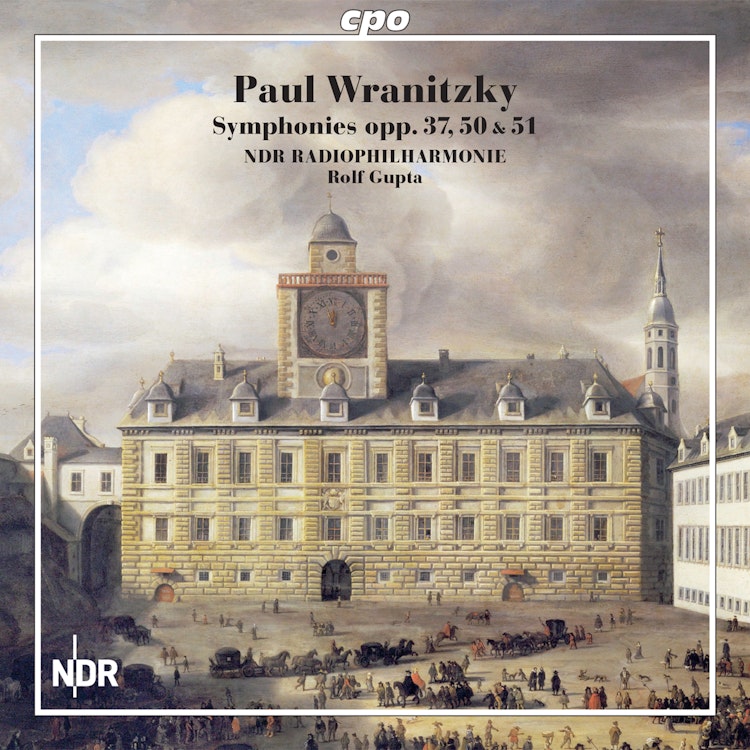
Paul Wranitzky (1756-1808) was a contemporary of Wolfgang Amadé Mozart and a highly influential composer in Vienna around 1800.
Composer Biography
Joseph Haydn highly valued Wranitzky's skills as a practical musician, insisting that Wranitzky lead the first violins for performances of his oratorio The Creation.
Performer Biography
The NDR Radiophilharmonie, founded in 1950, is an innovative symphony orchestra known for its high artistic quality and diverse programming, performing around 100 concerts per season.