Narodowa Orkiestra Symfoniczna Polskiego Radia NOSPR
Camerata Silesia
Bornus Consort
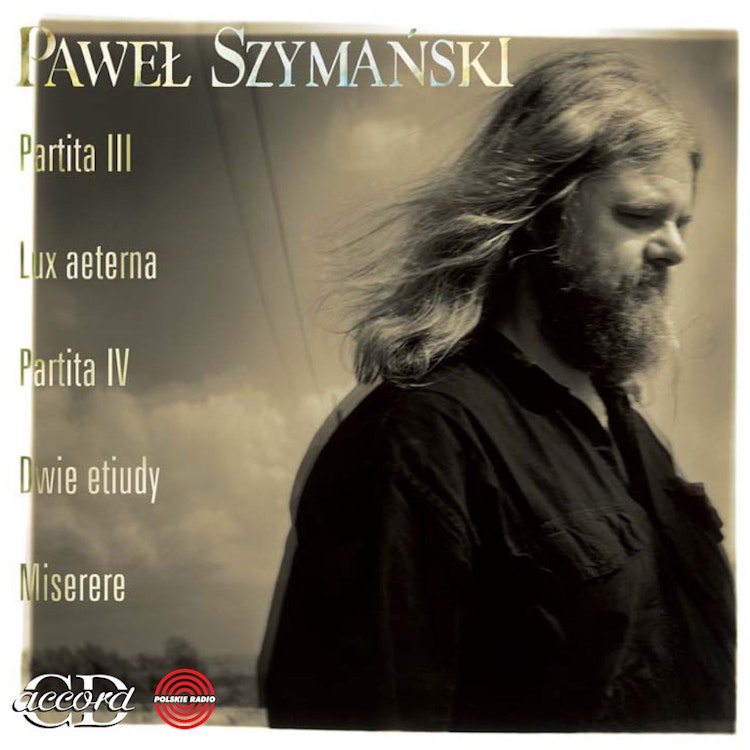
Pawel Szymanski
Did you know?
1/7
Historical Context
Szymański began composing Lux aeterna, a part of the Mass for the Dead, in November 1984, shortly after leaving Poland, which was affected by martial law and the murder of Solidarity priest Father Jerzy Popiełuszko.
Performer Biography
Elżbieta Chojnacka, the harpsichordist on this album, is a renowned performer of contemporary and early music, for whom composers like Xenakis, Ligeti, and Górecki have written works.
Composer's Artistic Vision
Szymański's music often uses a 'loop technique,' where the second section of a composition begins before the first has ended, similar to Witold Lutosławski's 'chain technique.'
Composer Biography
Paweł Szymański, born in 1954, developed his unique compositional style while studying at the Academy of Music in Warsaw.
Composer's Artistic Vision
Szymański's compositional technique, which he calls 'sur-conventionalism,' involves creating music from pre-arranged structural elements that are fragments of a hidden 'deep structure,' often a Baroque fugue or canon.
Compositional Technique
A key feature of Szymański's music is heterophony, where individual sounds, motifs, and rhythmic figures are scattered in time and space, creating an illusory musical landscape that engages both intellect and senses.
Compositional Technique
The title 'Partita' for Szymański's works refers to the colloquial Italian meaning of 'game' or 'contest,' rather than the musical term for a suite, highlighting a multi-layered interplay between speculation and sensory beauty.