Krzysztof Penderecki, a generation younger than Grazyna Bacewicz and Witold Lutosławski, was the most talked-about Polish composer in the early 1960s, notably for his work Threnody for the victims of Hiroshima.
Compositional Technique
Penderecki's String Quartet No 1 introduced a sound-world known as 'sonorism' in Poland, an approach that broke with tradition by focusing on unconventional sounds rather than melodies or regular rhythms.
Performer Biography
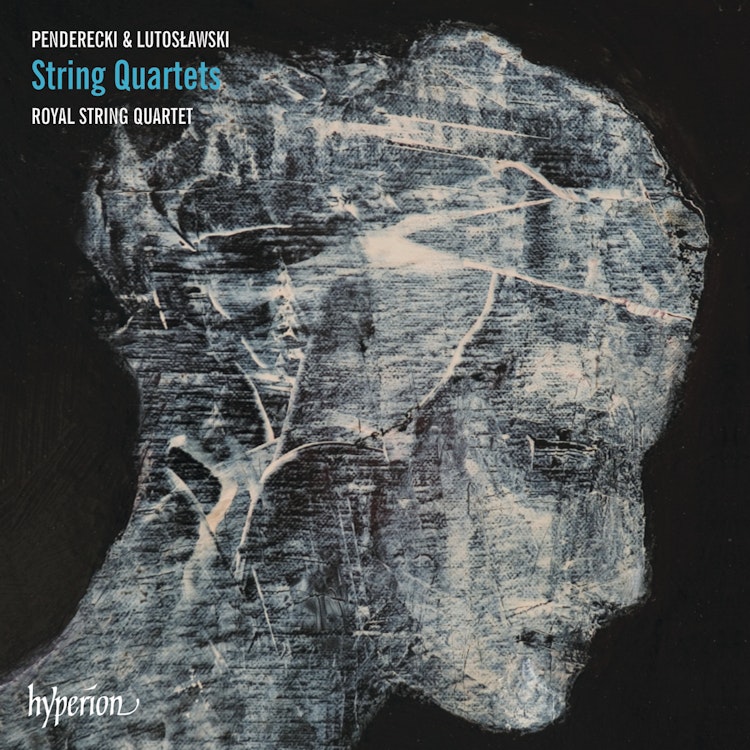
The Royal String Quartet, featured on this recording, was nominated for the Royal Philharmonic Society Chamber Music Award and is known for combining classical works with contemporary music.
Historical Context
The history of the Polish string quartet is relatively short, with significant development only occurring after Karol Szymanowski's two quartets (1917 and 1927) and the establishment of new ensembles after World War II.
Composer's Artistic Vision
Witold Lutosławski's String Quartet was designed with individual parts but no full score, as the composer intended for a 'mobile' character where players perform independently within certain timeframes.
Composition History
Six years after his second string quartet, Penderecki made a decisive break with sonorism, exploring a more harmonious, post-Romantic idiom influenced by composers like Bruckner and Shostakovich.
Compositional Technique
Penderecki's first string quartet features challenging instructions for players, including performing tremolo without a bow, striking strings with the palm, and playing between the bridge and tailpiece.