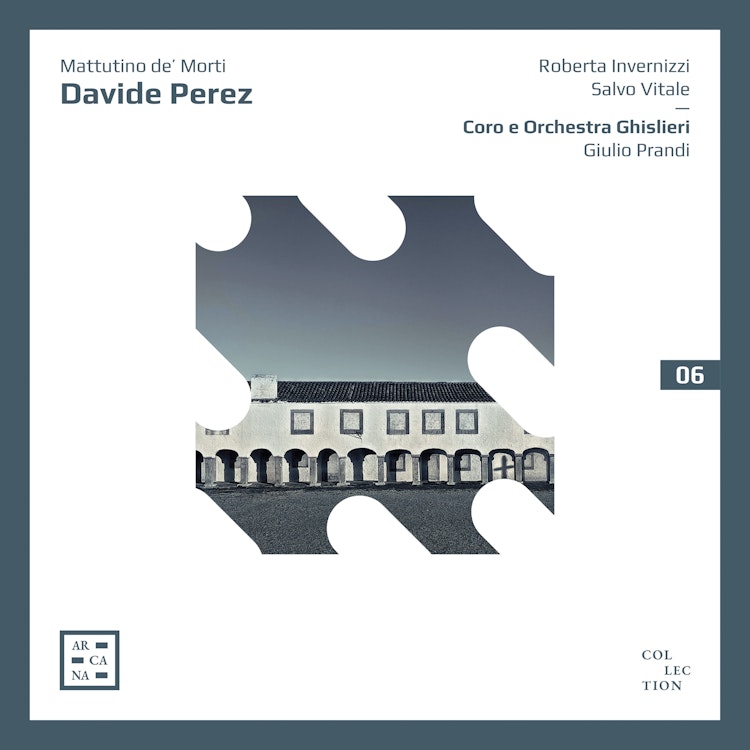
Perez's Mattutino de' Morti employs musical rhetoric on key liturgical words and creates specific moods through harmony, motif development, and orchestral color, with notable expressive instrumental parts.
Composer Biography
Davide Perez, a Neapolitan maestro, lived in Lisbon for 26 years until his death in 1778, holding the prestigious post of 'Compositor da Real Câmara e Mestre de Suas Altezas Reais' in the Royal Household.
Critical Reception
The Mattutino de' Morti was adopted by the Confraternity of St Cecilia for their annual ceremony honoring deceased musicians and remained in the standard repertoire in Lisbon until the late 19th century.
Compositional Technique
The Mattutino de' Morti uses the stile concertato, alternating choral passages with vocally demanding solo sections that include operatic overtones and improvised cadences.
Composition History
Davide Perez's Mattutino de' Morti was likely composed in 1770 for a pilgrimage to Nossa Senhora do Cabo, a medieval tradition supported by the monarchy.
Notable Performances
In 1770, the Mattutino was performed with 17 singers from the Royal Chapel and a medium-sized orchestra, but for St. Cecilia Confraternity ceremonies, larger ensembles were used, sometimes directed by Perez himself.
Critical Reception
William Beckford, an English writer, was deeply moved by a 1787 performance of the Mattutino de' Morti in Lisbon, calling it 'the most striking musical expression' and bursting into tears.
You might also enjoy...
Schütz: Schütz Edition, Vol. IV
Galuppi: Confitebur / Nunc Dimittis / Laudate Pueri
Bach, Handel, Stradella: Arias
Pergolesi: Stabat Mater (Live)
Schütz: Psalms of David
Deilig er Jorden (Arr. Eggen)
Charles-Joseph Van Helmont: Leçons de ténèbres
Francesco Scarlatti: Dixit Dominus – Mass
Monteverdi: Vespro della Beata Vergine
Campra: Requiem & Miserere
Vivaldi: Stabat Mater
Cavalli: Vespero della Beata Vergina Maria a 8 voci