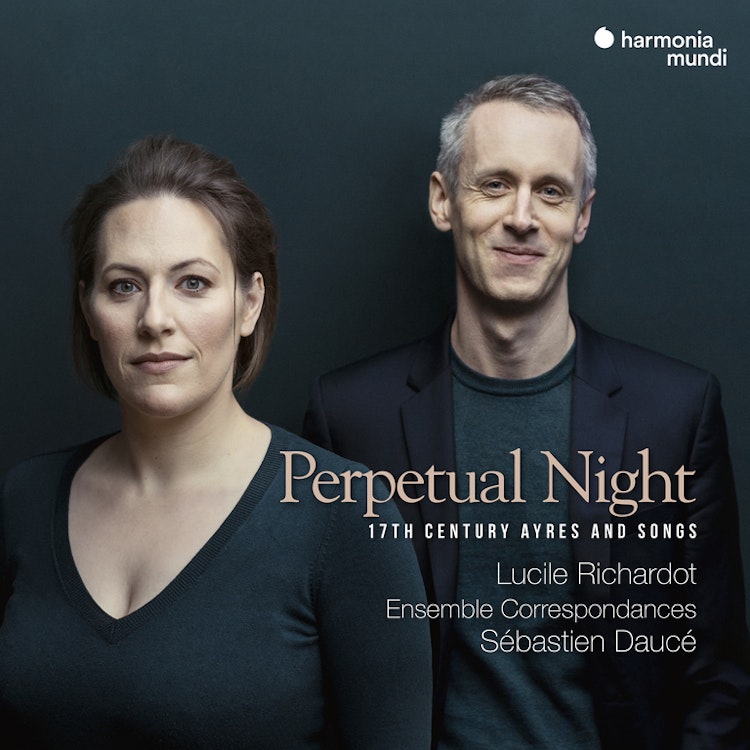
Winner of the 'Jahrespreis' 2018 - Preis der deutschen Schallplattenkritik and Diapason d'or de l'année 2018 (Musique baroque vocale).
Critic Christoph Irrgeher writes: "Lucile Richardot not only possesses an extraordinary voice, but her career has also taken an unusual course. She worked as a journalist before, at the age of 27, making singing her primary focus. Her timbre is simultaneously gripping and dazzling: the voice runs from a smooth, masculine lower range to crystalline, dark-tinted mezzo heights. Accuracy is allied to stupendous sensuousness, which is especially well suited to her new album, a selection of Baroque music from 17th-century England. She runs the gauntlet from songs and airs to dramatic scenes, on the way bringing to life, with beautiful shadowy colour, such real discoveries as William Webb's "Powerful Morpheus". She is accompanied with beguiling subtlety by Ensemble Correspondences under Sébastian Daucé"
Featuring
Sébastien Daucé
Lucile Richardot
Ensemble Correspondances
Robert Johnson
William Lawes
John Coprario
Robert Ramsey
Nicholas Lanier
John Jenkins
John Banister
Rhys Webb
John Hilton the Younger
Mickey Hart
John Blow
Matthew Locke
Henry Purcell
John Jackson
Did you know?
1/7
Historical Context
The extravagance of court masques, like William Davenant's Britannia triumphans, contributed to the opposition against King Charles I's rule, leading to the English Civil War in 1642.
Composer Biography
Nicholas Lanier, a court musician of French descent, was likely the first Englishman to play the Italian Baroque guitar and was a favorite of Prince Charles, becoming Master of the Royal Music in 1625.
Compositional Technique
Prince Henry's musicians introduced the Italian art of accompanying from a bass line (basso continuo) and the theorbo, a long-necked lute, to England.
Historical Context
1610 was a pivotal year for English music, as King James I's eldest son, Henry Frederick Stuart, became Prince of Wales and formed his own musical household.
Historical Context
After the Restoration of Charles II in 1660, London's theatres reopened, and public concerts began to thrive, attracting musicians from across Europe by 1700.
Performer Biography
Lucile Richardot, the mezzo-soprano on this album, initially worked as a journalist before pursuing her singing career, which spans medieval to contemporary repertoire.
Compositional Technique
A central vocal idiom developed by Prince Henry's musicians was 'declamatory song,' where the vocal line mirrors speech inflections and illustrates words, making them less tuneful but more melodically coherent than recitative.
You might also enjoy...
"Je m'abandonne à vous" Songs on poems by Henriette de Coligny, Comtesse de La Suze
Ev'ry Time We Say Goodbye
Voyage A Paris: Songs of Francis Poulenc
The Songs of Ronald Corp
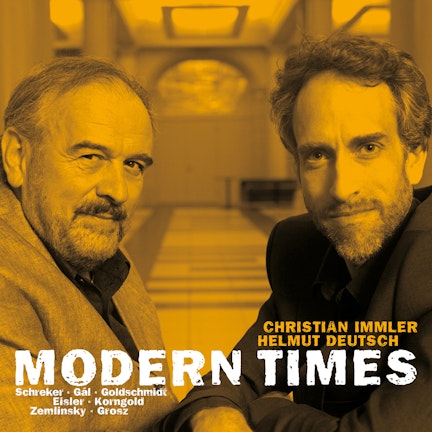
Modern Times: Songs by Schreker, Gál, Goldschmidt, Eisler, Korngold & Zemlinksy
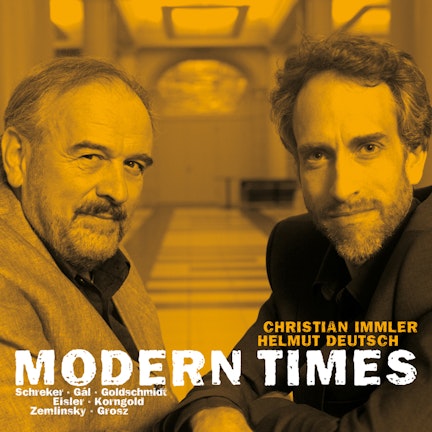
Modern Times: Songs by Schreker, Gál, Goldschmidt, Eisler, Korngold & Zemlinksy
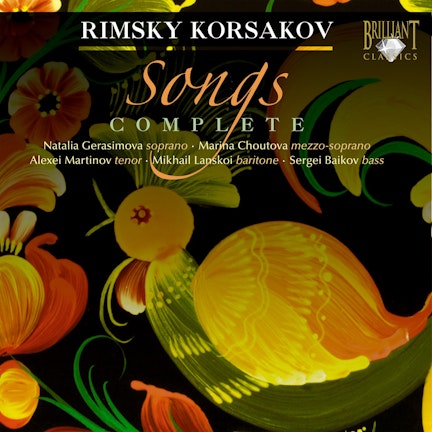
Rimsky-Korsakov: Songs, Complete
Coates, E.: Songs
Coates, E.: Songs
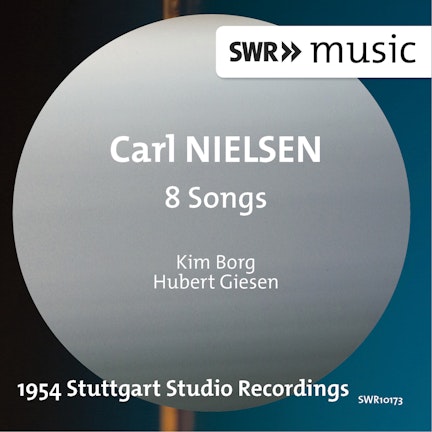
Nielsen: 8 Songs
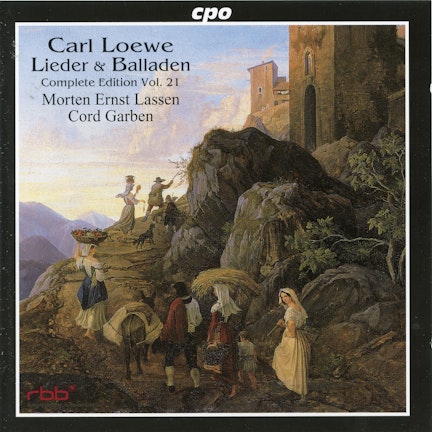
C. Loewe: Lieder & Balladen, Vol. 21
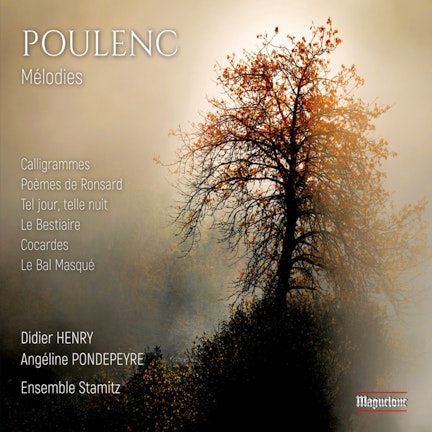
Poulenc: Mélodies
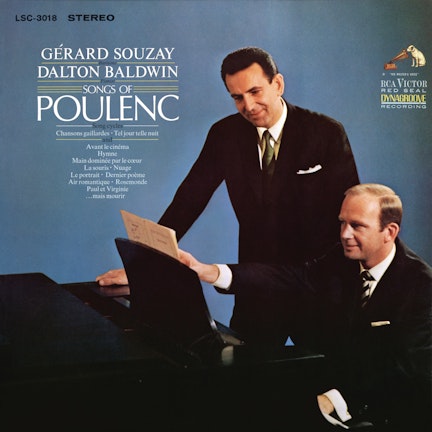
Songs of Poulenc
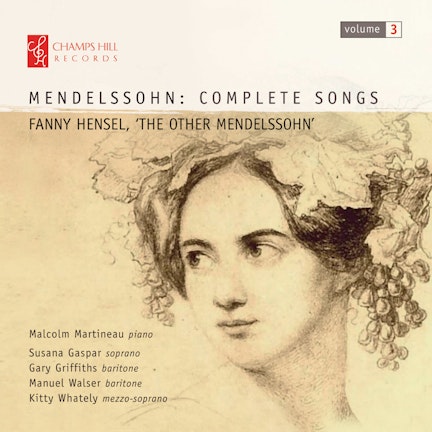
Mendelssohn: Complete Songs, Vol. 3 – Fanny Hensel, 'The Other Mendelssohn'