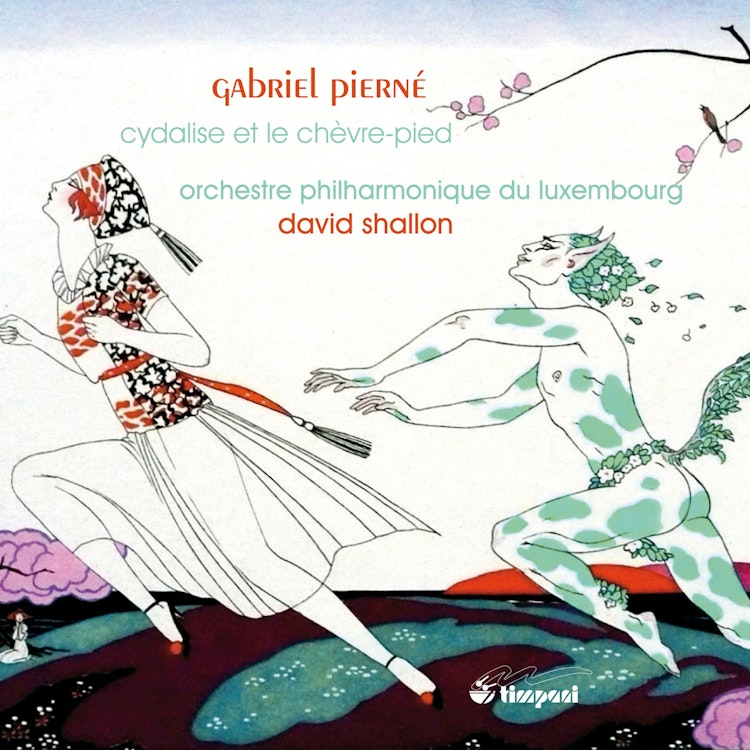
The ballet Cydalise et le chèvre-pied was composed between 1911-1914, but its premiere was delayed for eight years due to events like World War I and the death of its librettist, Armand de Caillavet.
Composer Biography
Gabriel Pierné, the composer, entered the Paris Conservatoire in 1871 and won numerous awards, including first prizes in piano, counterpoint, and organ, as well as the Prix de Rome.
Compositional Technique
The ballet Cydalise et le chèvre-pied juxtaposes different styles, including an old-style ballet and a 'dance class in the Hypolydian mode,' unified by modern harmonies and rhythms, and a colorful orchestration.
Recording & Production
This recording of Pierné's Cydalise et le chèvre-pied by the Orchestre Philharmonique du Luxembourg received a 2002 'Cannes Classical Award' for 'Best Record of the Year'.
Composer Biography
Gabriel Pierné succeeded César Franck as organist at the church of Sainte-Clotilde in Paris from 1890-1898.
Compositional Technique
Pierné's Cydalise et le chèvre-pied uses a particularly luxuriant instrumental force, including five percussionists, piano, harpsichord, celesta, and six flutes (three piccolos), notably in the 'L'École des Aegypans' section.
Composer Biography
Gabriel Pierné, the composer, became a renowned conductor, leading the Concerts Colonne from 1910 to 1934, where he premiered major works like Stravinsky's Firebird and Ravel's Daphnis et Chloé.
You might also enjoy...
Richard Strauss: Elektra
Wagner: Die Walküre
Wagner: Siegfried
Strauss: Salome, Op. 54
Wagner: Parsifal
Wagner: Lohengrin - The Sony Opera House
Wagner: Parsifal
Nielsen: Saul & David
Schönberg: Moses und Aron
Götterdämmerung - Oper in einem Vorspiel und drei Aufzügen
Kraus, J.M.: Aeneas in Carthage - Overtures, Ballet Music and Marches