Platti's trio sonatas often feature a slow-fast-slow-fast movement sequence, with the opening movements frequently setting up the bass and treble instruments in a quasi-fugal relationship.
Composer Biography
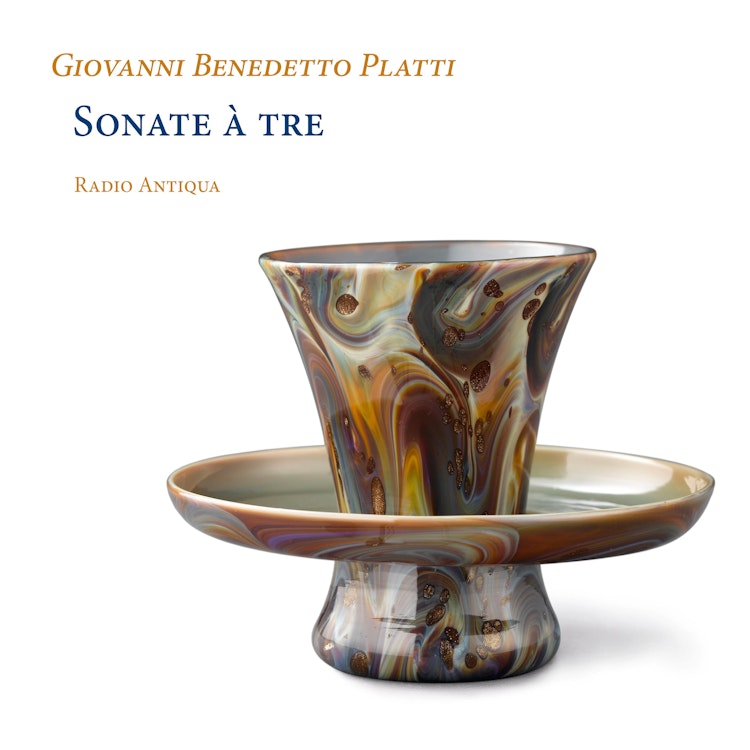
Giovanni Benedetto Platti, the composer, was born in northern Italy around 1697 and spent part of his youth in Venice, where his father was a violetta player at St. Mark's.
Performer Biography
Radio Antiqua, the ensemble performing on this album, was founded in The Hague in 2012 to perform lesser-known repertoire for a unique combination of instruments.
Composition History
Platti was employed by Rudolf Franz Erwein, Count of Schönborn, a passionate musician who sought new material for his musical exercises and for whom Platti composed many works.
Critical Reception
For a long time, the only evidence of Platti's compositional activity were flute and harpsichord sonatas and concerti published in the 1740s, as larger-scale works were thought lost.
Historical Context
During the 17th and 18th centuries, European musical tastes were broadly tuned to Italian music, leading many Italian musicians to work abroad.
Composition History
The Schönborn-Wiesentheid collection, Rudolf Franz Erwein's personal music library, preserves over 60 of Platti's works, including cello pieces, Masses, a Requiem, a Stabat Mater, cantatas, and an oboe concerto, many of which are unique manuscripts.
You might also enjoy...
Philipp Heinrich Erlebach: 6 Sonate
Couperin: Complete Published Trios for Two Harpsichords
Stradella & Gregori: Sinfonias & Concerti grossi
The Mandolin in London
Klangraum Kloster Maulbronn: Bach Meets Vivaldi (Live)