BBC Music Magazine Choice. Gramophone Editor's Choice.
Featuring
Héloïse Gaillard
Stéphanie d'Oustrac
Ensemble Amarillis
Reinhard Keiser
André Campra
André Cardinal Destouches
Marin Marais
Johann David Heinichen
Henry Purcell
John Eccles
George Frideric Handel
Jean-Féry Rebel
Did you know?
1/7
Historical Context
At the beginning of the 18th century, the allegorical figure of Folly began to appear in operas as a social, joyful, and carefree character, often alongside Carnival, Bacchus, Momus, and Love.
Historical Context
In the Baroque era, Folly and Love were often closely linked, as summarized by Jean de La Fontaine's fable where Folly is condemned to guide Love.
Cultural Impact
The presence of Folly in theatrical performances served as a critique of the ideas and customs of the court of Versailles at the end of Louis XIV's reign, satirizing a declining system and foreshadowing the Age of Enlightenment.
Historical Context
The festivities of Carnival, with its balls, masquerades, and games, were a central theme in compositions featuring Folly, reflecting an inversion of social codes that allowed for license and extravagance.
Cultural Impact
In the visual arts, Folly and fools were often identified by their green, yellow, and red clothes, and attributes like the jester's marotte (sceptre) and bells, symbolizing disturbances and dualities of the soul.
Composer's Artistic Vision
Behind the mask of Folly, poets and composers of the early 18th century often defended their ideas and sided with the 'Moderns,' who were proponents of Italian artistic styles.
Album & Artwork
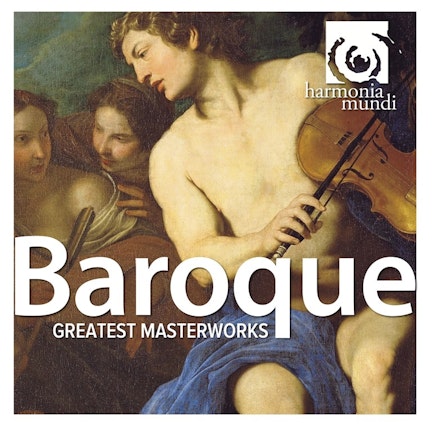
This recording explores the multifaceted character of Folly, an emblematic figure in the Baroque era, who was often depicted as both extreme and extravagant.