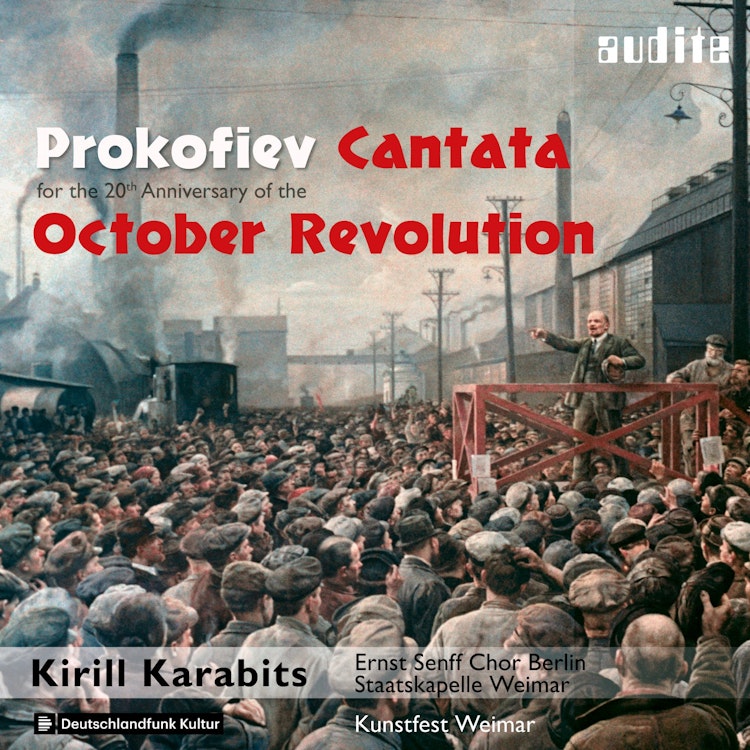
Prokofiev: Cantata for the 20th Anniversary of the October Revolution
11/24/2017, 10 Tracks, 41:53
Featuring
Kirill Karabits
Staatskapelle Weimar
Luftwaffenmusikkorps Erfurt
Ernst Senff Chor
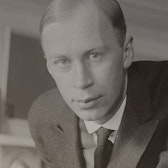
Sergei Prokofiev
Did you know?
1/7
Critical Reception
Prokofiev's Cantata for the 20th Anniversary of the October Revolution remained unperformed during his lifetime because no one dared to take responsibility for a work that might displease Stalin.
Instruments
The cantata's scoring included accordions and percussion, reflecting the aesthetics of Proletkult (proletarian culture), and incorporated futuristic noises like cannon shots, alarm bells, machine guns, and sirens.
Historical Context
The year 1937, when Prokofiev composed this cantata, was a high point of Soviet culture, coinciding with the 20th anniversary of the October Revolution and the centenary of Alexander Pushkin's death.
Compositional Technique
The cantata features a stylistic panorama including choral movements, text declamation, pseudo-religious psalmody, and three instrumental movements with illustrative symphonic colors.
Composer Biography
Sergei Prokofiev, the composer, decided to return to the Soviet Union permanently in 1936 after realizing that other Russian musicians had become leading figures in the USA and Western Europe.
Composition History
Prokofiev himself compiled the texts for the Cantata for the 20th Anniversary of the October Revolution, creating a dramatic structure that spans almost a hundred years of revolutionary history.
Composer's Artistic Vision
Prokofiev deliberately adapted his personal style towards a simple and song-like idiom, aligning with official definitions of Socialist Realism in music.
You might also enjoy...
Prokofiev: Alexander Nevsky
Stojowski: Suite for Orchestra, Le printemps & Prayer for Poland