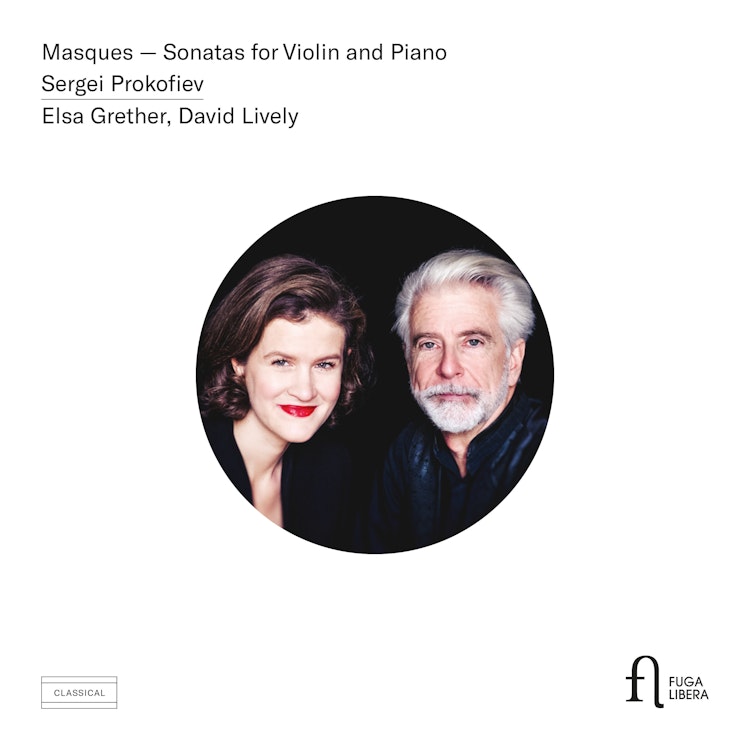
Prokofiev's Sonata in D major, Op. 94bis, was originally composed as a duo for flute and piano, and was later transcribed for violin at the request of violinist David Oistrakh.
Historical Context
The composition of Prokofiev's Sonata in F minor, Op. 80, was influenced by his difficult return to Russia, censorship of his works, his wife Lina being suspected as a spy, and the looming war and Stalinism.
Composition History
Prokofiev's Sonata in F minor, Op. 80, was composed over a long period (1938-1946), partly because world events inspired him to compose other works like the cantata Alexander Nevsky and the 5th Symphony.
Composition History
The Sonata for solo violin in D major, Op. 115, Prokofiev's last composition for a stringed instrument, was inspired by a violin competition where contestants played Bach's Partita No. 3 in unison.
Composer Biography
Sergei Prokofiev, a magnificent virtuoso pianist, composed some of the finest works for strings of the entire 20th century, including two violin concertos, two violin sonatas, and unique cello masterpieces.
Composer's Artistic Vision
Prokofiev liked to create works that contrasted strongly with each other, a characteristic seen in his operas Semyon Kotko and Betrothal in a Monastery, as well as his sonatas.
Composer's Artistic Vision
Prokofiev instructed the pianist Lev Oborin, who premiered the Sonata in F minor, Op. 80, to play it with such intensity that people would jump in their seats and question his sanity.
You might also enjoy...
Ravel: Violin Sonata No. 2, M. 77 - Hindemith: Sonata for Violin and Piano in E Major - Prokofiev: Violin Sonata, Op. 115 & 5 Melodies, Op. 35bis
Kaleidoscope
The Talented Kontski Brothers: Works for Violin & Piano
Strike, Strum and Stride
Crossroads
Zing!
Encores für Violine und Klavier
De Falla: Suite populaire espagnole - Hindemith: Sonata (1940)
Fritz Kreisler - Original compositions and arrangements