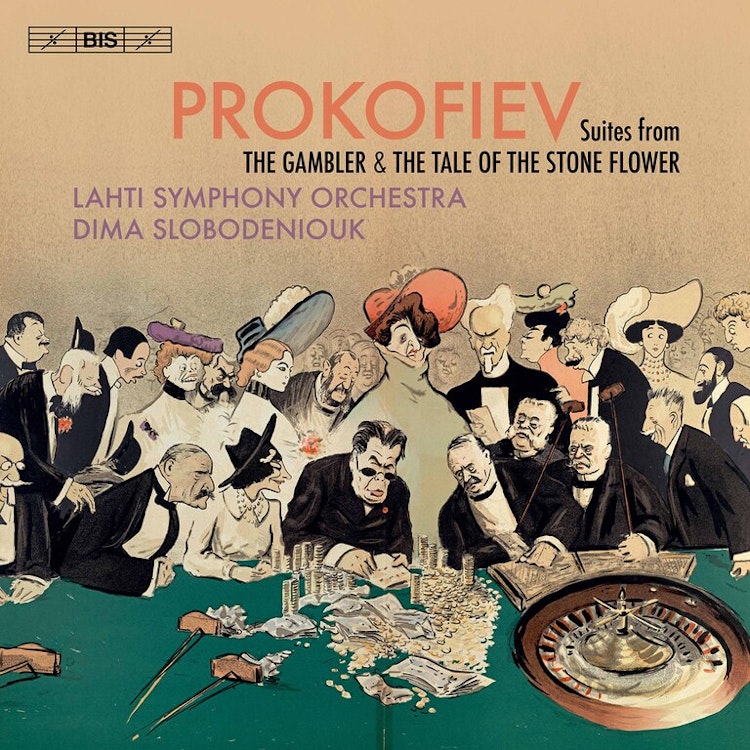
Prokofiev: Suites from The Gambler & The Tale of the Stone Flower
4/3/2020, 17 Tracks, 1:02:42
Featuring
Dima Slobodeniouk
Lahti Symphony Orchestra
Sergei Prokofiev
Did you know?
1/7
Historical Context
All music Prokofiev composed between 1948 and his death in 1953 was written under the shadow of the notorious 1948 Resolution, which condemned many Soviet composers and demanded adherence to an approved style.
Composition History
Prokofiev chose the ballet The Tale of the Stone Flower as a safer way to regain favor with Soviet authorities after his opera The Story of a Real Man was deemed ideologically and artistically flawed.
Recording & Production
This recording splices together two compilations from The Stone Flower: the Wedding Suite, Op. 126, and the Gypsy Fantasy, Op. 127, both of which were performed in Moscow in late 1951.
Performer Biography
Dima Slobodeniouk, the conductor, combines the cultural and musical heritage of his birth country, Russia, with that of his adopted homeland, Finland.
Composer's Artistic Vision
When composing his opera The Gambler, Prokofiev aimed to create a concentrated psychological drama with vocal and orchestral textures reflecting the frantic stage action, rather than traditional lyricism.
Compositional Technique
The concert work Four Portraits from The Gambler is not a conventional suite; Prokofiev created it by taking a vocal score, tearing out pages for each main character, and then recomposing and re-assembling the music.
Composition History
Prokofiev's opera The Gambler, based on Dostoyevsky's novel, faced numerous setbacks, with planned performances in 1917 and the late 1920s falling through due to revolutionary chaos and other issues.
You might also enjoy...
Prokofiev: Lieutenant Kije Suite / Andante / Osenneye / the Tale of the Stone Flower (Excerpts)
Prokofiev, S.: Lieutenant Kije Suite / the Tale of the Stone Flower / Dreams / Andante / Autumnal Sketch