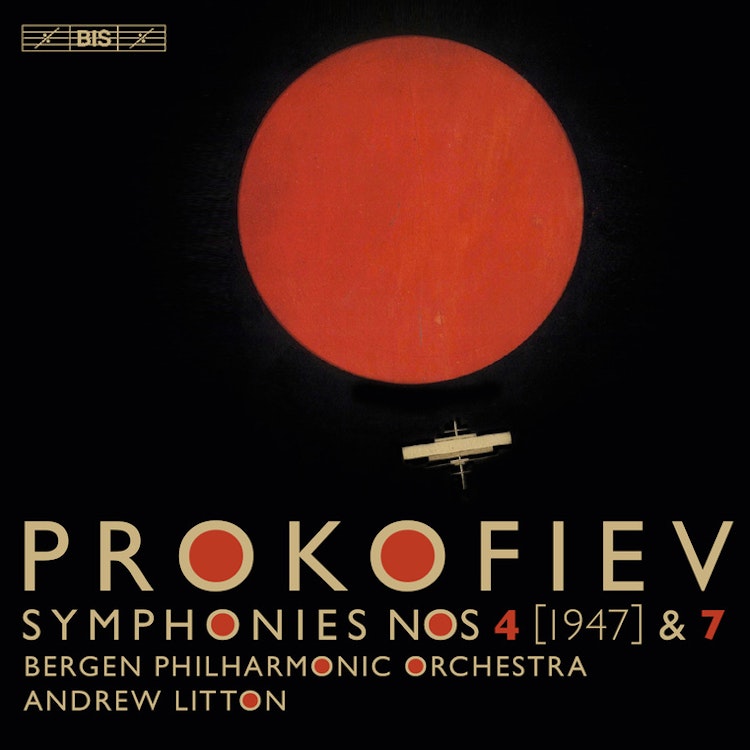
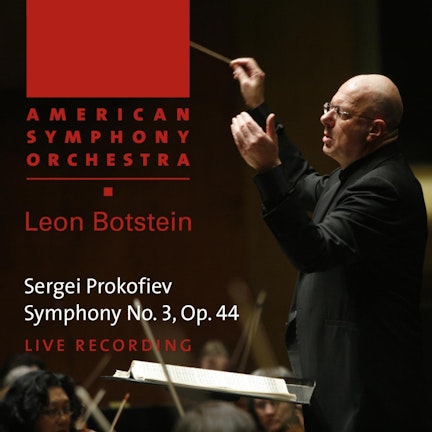
For his Fourth Symphony, Prokofiev extensively used material from his ballet The Prodigal Son, including both music from the ballet and discarded sketches.
Historical Context
The 1947 revision of Prokofiev's Fourth Symphony (Op. 112) was designed as a "real Soviet symphony" to avoid associations with its original source material, which included elements anathema to Soviet authorities.
Composition History
The first version of Prokofiev's Fourth Symphony (Op. 47) was commissioned by Sergei Koussevitzky for the 50th anniversary of the Boston Symphony Orchestra.
Composition History
Prokofiev's Seventh Symphony, his last major work, was composed between December 1951 and July 1952, and he publicly stated he aimed for simplicity, calling it "a symphony for children."
Composition History
Prokofiev's Fourth Symphony exists in two distinct versions, Op. 47 (1930) and Op. 112 (1947), which the composer considered separate works, each with its own opus number.
Interpretation
The recording includes two endings for the Seventh Symphony: Prokofiev's original wistful coda and an alternative, more upbeat ending added at the suggestion of conductor Samuil Samosud to satisfy Soviet optimism.
Composer Biography
Prokofiev never heard the 1947 version of his Fourth Symphony; its first concert performance was in 1957, after his death.
You might also enjoy...
Prokofiev: Romeo and Juliet (Excerpts from Suites 1 & 2)
Prokoviev: Symphony No. 5 in B-Flat Major, Op. 100
Prokofiev: Symphonies No. 6 and No. 7
Prokofiev: Symphonies Nos. 1 & 5
Prokofiev: Symphony No. 4
Prokofiev: Symphony No. 7 in C-Sharp Minor, Op. 131
Prokofiev: Romeo and Juliet, Opp.64a & b
Prokofiev: Symphony No. 1
Prokofiev: Symphony No. 5 in B-Flat Major, Op. 100