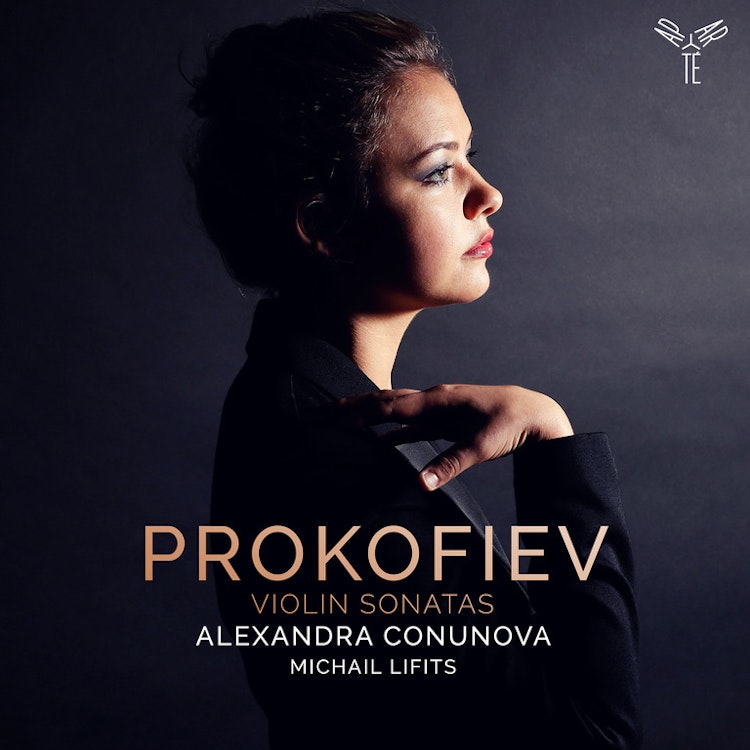
Prokofiev's Violin Sonata No. 1 in F minor was sketched in 1938, put aside for eight years, and completed after World War II.
Instruments
The violin used in this recording is a Santo Serafino from 1735, on loan from the Deutsche Stiftung Musikleben (German Foundation for Musical Life) in Hamburg.
Composer Biography
During the composition of the F major Sonata, Prokofiev faced personal hardships including the deportation of colleagues like director Vsevolod Meyerhold and the arrest of his wife, Lina.
Compositional Technique
Prokofiev's two violin sonatas synthesize his style, combining a classical conception of form with modern elements like extreme virtuosity, aggressive rhythmic drive, and chromatic harmonies.
Recording & Production
This recording was made possible by the Borletti-Buitoni Trust, which supports young musicians in developing their international careers.
Composer's Artistic Vision
Prokofiev once stated that the impetuous scale passages in the first movement of his F minor Sonata should sound "like the wind in a graveyard."
Composition History
Prokofiev's Violin Sonata No. 2 in D major was originally a Sonata for flute and piano, which David Oistrakh, a renowned violinist, encouraged Prokofiev to transcribe for violin.
You might also enjoy...
Works for Violin and Piano By Igor Stravinsky and Dmitri Shostakovich
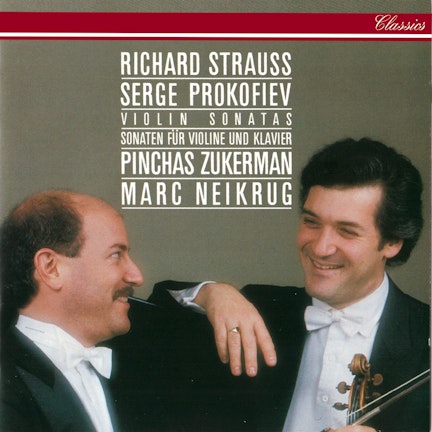
Richard Strauss: Violin Sonata / Prokofiev: Violin Sonata No. 2