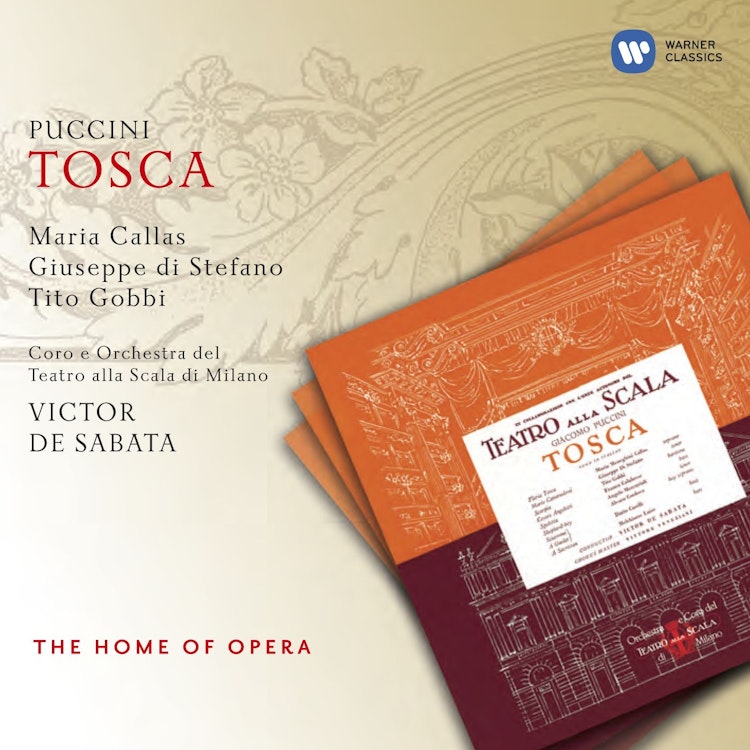
Despite being almost universally revered today, this 1953 recording of "Tosca" was not especially well-received at the time, with some English critics yearning for a more lyrical interpretation.
Performer Biography
Maria Callas, despite her iconic portrayal of Tosca, considered it one of her least favorite roles, partly due to the grueling three-month rehearsals for her debut performance in Athens in 1942.
Performer Biography
Tito Gobbi, who sings Scarpia on this recording, loved the role so much that he used the chords heralding Scarpia's Act 1 appearance as the epigraph for his autobiography, "My Life."
Compositional Technique
Puccini's "Tosca" is highly sophisticated in its use of motifs, which act as musical labels for characters, incidents, and ideas, rather than developing like Wagnerian leitmotifs.
Recording & Production
This 1953 mono recording of "Tosca" is considered a technical "tour de force," with producer Walter Legge using "miles of tape" and extensive retakes, including two six-hour sessions for the Te Deum alone.
Composition History
Puccini's publisher, Giulio Ricordi, initially commissioned Alberto Franchetti to compose an opera based on Victorien Sardou's play "Tosca," with a libretto by Luigi Illica, which was even approved by the 82-year-old Verdi.
Composer's Artistic Vision
Puccini, a realist and perfectionist, meticulously researched historical and topographical details for "Tosca," such as the most common plainsong for the Te Deum in Roman churches and an authentic shepherd boy's song.