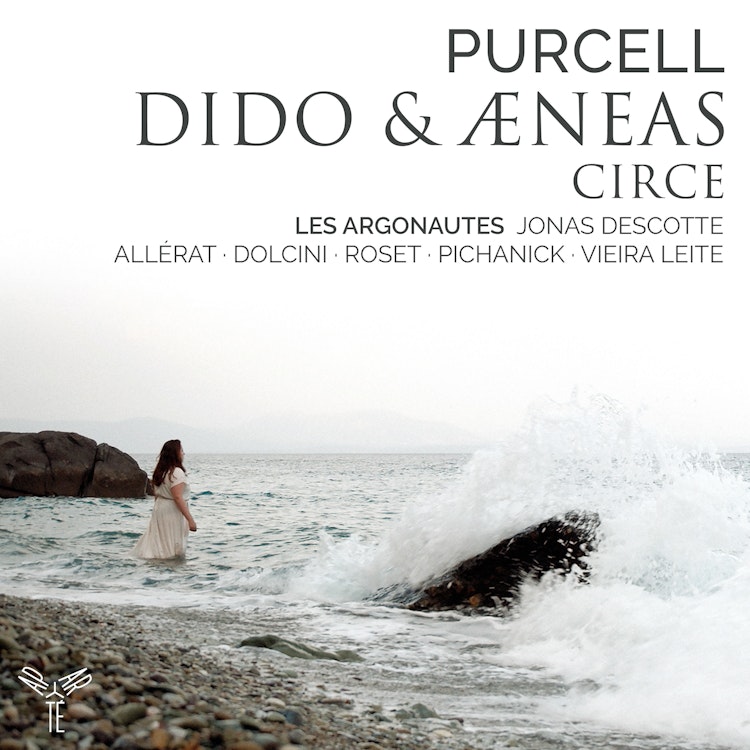
This recording of Dido and Aeneas uses a 'one-voice-per-part' approach, which is suited to the work's intimate chamber opera scale and allows for detailed musical shaping.
Composer's Artistic Vision
Nahum Tate, the librettist for Dido and Aeneas, transformed Virgil's Aeneid episode, which takes place over several months, into a classical framework of twenty-four hours.
Composition History
Purcell's opera Dido and Aeneas was first performed at Mr. Josias Priest's Boarding-School at Chelsey by young gentlewomen.
Recording & Production
The album includes incidental music from Purcell's Circe, which was originally composed by John Banister in 1677, with Purcell reworking some parts for a later performance.
Compositional Technique
Dido's first aria and her famous final lament are set to ground basses, a repeated bass line over which the melody flows freely.
Historical Context
Opera was slow to take hold in England due to wars during the period of operatic development in Italy and the English preference for spoken entertainment.
You might also enjoy...
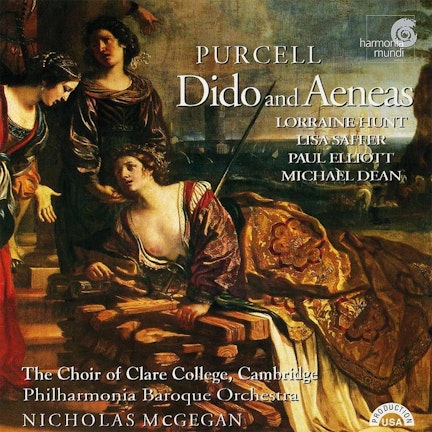
Purcell: Dido and Aeneas
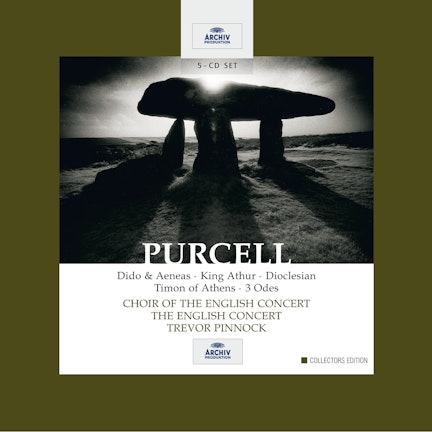
Purcell: Dido & Aeneas / King Arthur / Dioclesian / Timon of Athens / 3 Odes
Handel Edition Volume 3 - L'Allegro, Il Penseroso ed il Moderato, Tamerlano, Alcina, Il Pastor Fido, Terpsichore
Purcell: Dido and Aeneas, Z. 626
Purcell: King Arthur, 1691
Monteverdi: Il Combattimento di Tancredi e Clorinda; Ballo delle Ingrate; Tirsi e Clori
Purcell: Music for a While
Charpentier: Actéon, Orphée descendant aux enfers & La pierre philosophale
Purcell/Händel: Suite Concerto
Purcell,Händel: Suite/Concerto
John Eliot Gardiner Conducts French Baroque Music: Couperin, Rameau, Campra & Leclair