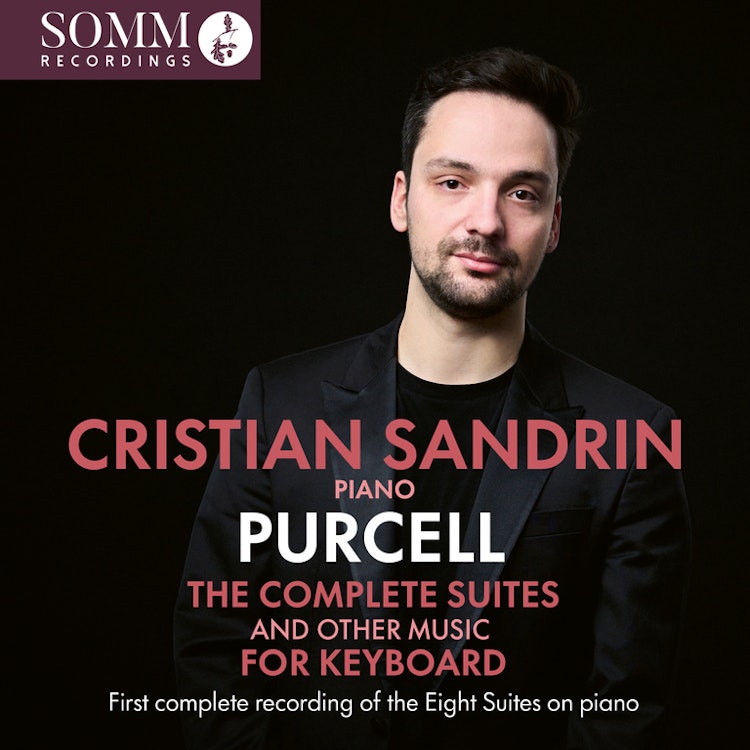
Purcell: The Complete Suites & Other Music for Keyboard
5/16/2025, 38 Tracks, 1:01:09
Featuring
Cristian Sandrin
Henry Purcell
Did you know?
1/7
Historical Context
Purcell lived in a cosmopolitan English court that sought to emulate the new French musical style of Louis XIV's court, influencing his teachers and the style of his Eight Suites.
Recording & Production
The idea for this recording of overlooked Baroque keyboard music on a modern piano was sparked by a chance hearing of Myra Hess's recording of a Saraband from Purcell's Keyboard Suite No. 2.
Instruments
A modern piano, like a microscope, allows for greater magnification of early music details, sustaining sounds longer and creating legato effects more readily than period instruments like spinets or harpsichords.
Interpretation
The performer, Cristian Sandrin, views the use of a modern piano for Purcell's Baroque music as an opportunity to magnify details and review a bygone era's culture in a more familiar language.
Composer Biography
Henry Purcell, the composer, was born in London in 1659, a year after the monarchy was restored with King Charles II, and his family was deeply involved in music.
Composition History
Purcell's Eight Suites were published posthumously by his widow, Frances Purcell, and were likely composed for his noble students to enjoy a private musical experience.
Cultural Impact
Queen Mary II's love for music and dance made dance forms a popular genre among English composers of Purcell's time, influencing much of his secular output.
You might also enjoy...
The Long 17th Century: A Cornucopia of Early Keyboard Music
Codex
Purcell & Mozart
Hässler: Piano Works
Bach: Concerti, Capriccio & Aria
Bach: Aria variata & Other Keyboard Works
Reformation: Keyboard works by William Byrd, Orlando Gibbons, John Bull & Jan Pieterszoon Sweelinck