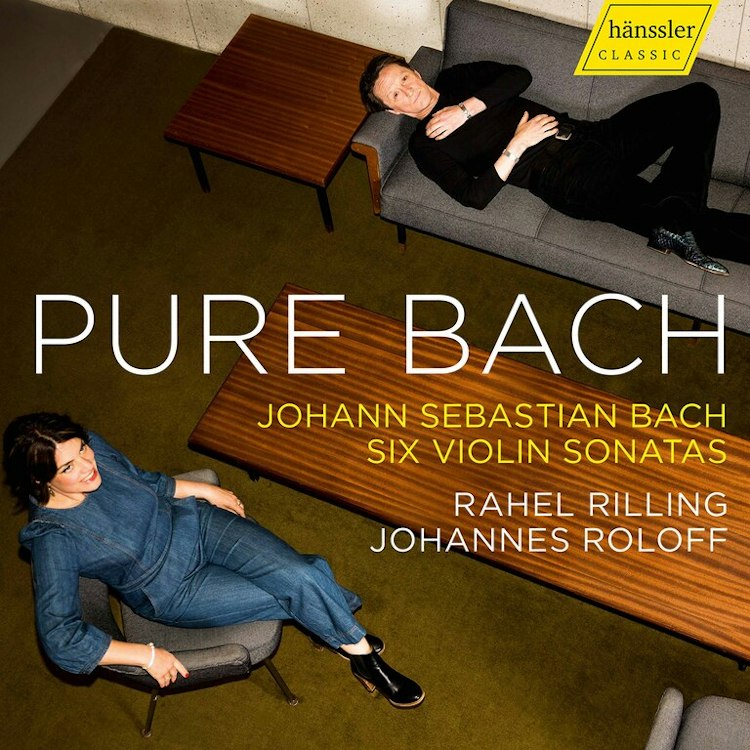
The exact time and place of composition for Bach's Six Sonatas for Violin and Harpsichord (BWV 1014-1019) are uncertain, though they may have been composed in Köthen or Leipzig.
Instruments
Bach may have been inspired to give the harpsichord a more prominent role in these sonatas by a special two-manual harpsichord by Michael Mietke, acquired by Prince Leopold in 1719.
Performer Biography
Violinist Rahel Rilling comes from a renowned musical family; her father is Helmuth Rilling, a conductor and Bach specialist, with whom she toured as a young violinist.
Instruments
Rahel Rilling performs on a violin made by Tomaso Balestrieri in Cremona in 1767.
Composer's Artistic Vision
Bach's Sonatas BWV 1014-1019 are essentially trio sonatas, where the harpsichord's left hand provides the bass, and its right hand, along with the violin, forms two upper voices.
Compositional Technique
In these sonatas, Bach elevated the harpsichord from a mere thoroughbass instrument to an equal partner with the violin, a novel approach for his time.
Critical Reception
Bach's son, Carl Philipp Emanuel, remarked in 1774 that these sonatas still sounded "very good" despite being over 50 years old, praising their songful Adagios.
You might also enjoy...
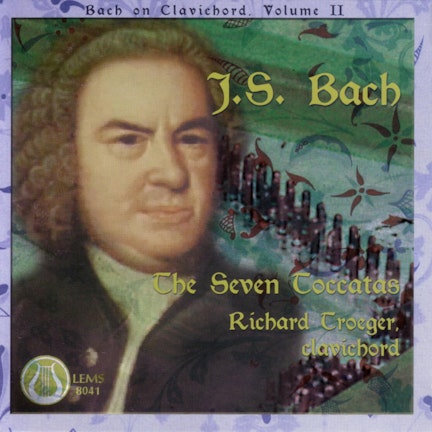
Johann Sebastian Bach: The Seven Toccatas, Bach on Clavichord, Vol 2
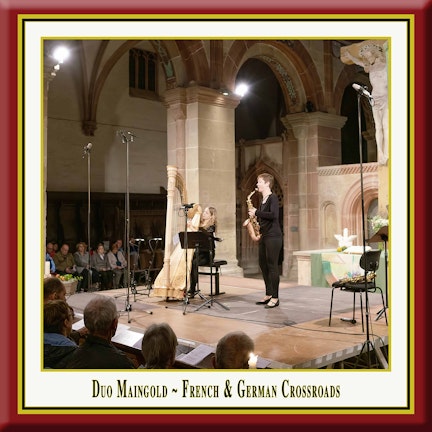
French & German Crossroads (Live)
Encores
French Songs for Flute & Harp: Debussy, Ravel, Fauré
Bach: Plucked / Unplucked
Soler: Keyboard Sonatas Nos. 67-74
Duel
Clair de Lune
Aïrés
The Art of the Harpsichord, Vol. 2
Piano works by Ernesto Drangosch - Celestino Piaggio - Manuel Gomez Carrillo