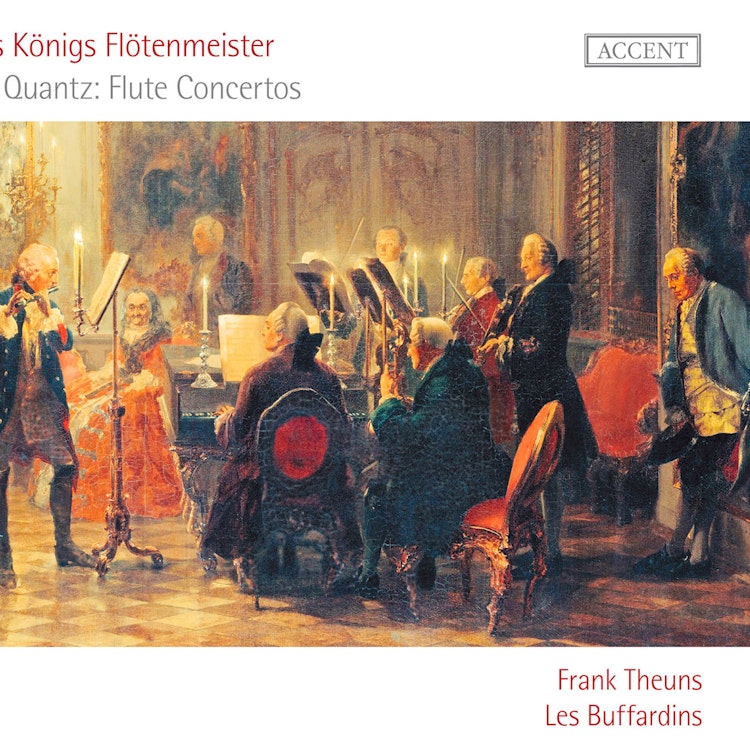
This recording uses the 'lower chamber tone' to capture the appropriate aesthetic tonal qualities of Quantz's music, reflecting the historical tuning practices of his time.
Instruments
Quantz flutes, with their wide bore, were designed for the 'low chamber pitch' common in Berlin and Paris, which was about a whole tone lower than modern instrument tuning.
Composer Biography
Johann Joachim Quantz, the composer, began his career as a city wait and professional musician, learning to play numerous instruments including violin, oboe, and trumpet.
Composer's Artistic Vision
Quantz's book, 'Essay on a Method for Playing the Transverse Flute,' published in 1752, is still considered a major source for 18th-century performance practice, discussing flute techniques and broader aesthetic principles.
Composer Biography
Quantz, the composer, switched from oboe to transverse flute after feeling hindered on both instruments, taking lessons from Pierre-Gabriel Buffardin, the principal flautist of the Dresden court orchestra.
Composition History
The majority of Quantz's approximately 281 flute concertos were composed specifically for Frederick II, the King of Prussia, taking into account his stylistic preferences.
Instruments
Quantz, the composer, was also an instrument maker, creating his own flutes from 1739 onwards to achieve his ideal of a 'bright, incisive, broad, round, masculine but pleasant tone.'
You might also enjoy...
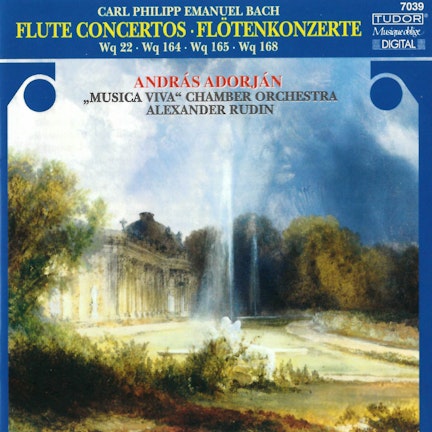
Bach, C.P.E.: Flute Concertos in G Major / D Minor / A Major
C.P.E. Bach: 3 Flute Concertos
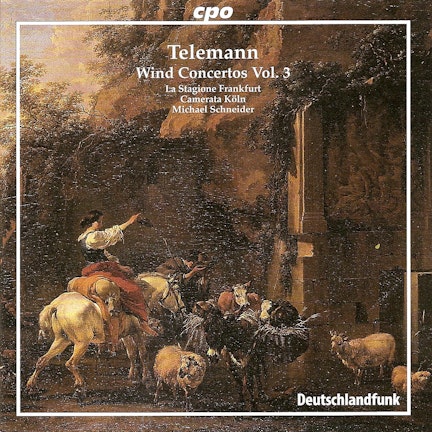
Telemann Concertos
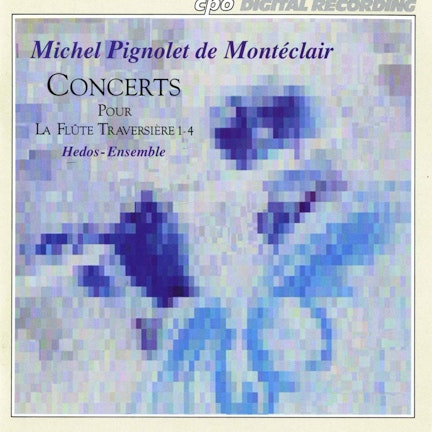
Michel Pignolet de Montéclair: Concerts pour la Flûte Traversière avec la Basse Chiffré
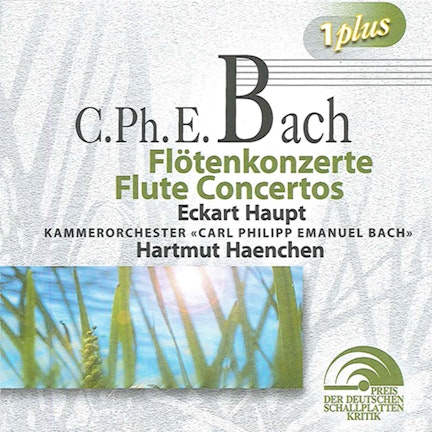
C.P.E. Bach: Flute Concertos
Bach, C.P.E.: Flute Concertos
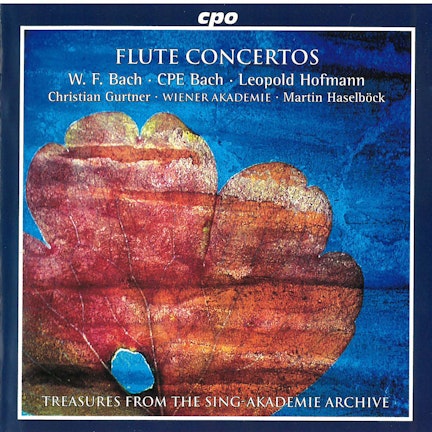
W.F. Bach, C.P.E. Bach & Hofmann: Flute Concertos
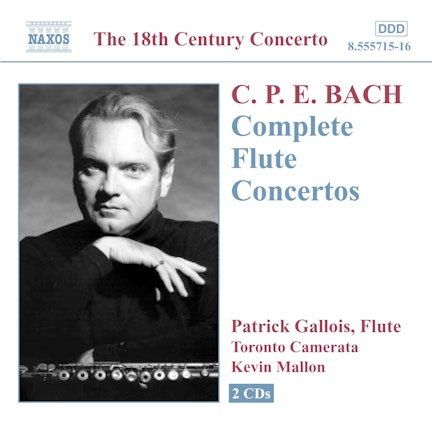
Bach, C.P.E.: Flute Concertos (Complete)
Monteclair: Flute Concertos Nos. 1-4
The Grand Mogul: Virtuosic Baroque Flute Concertos
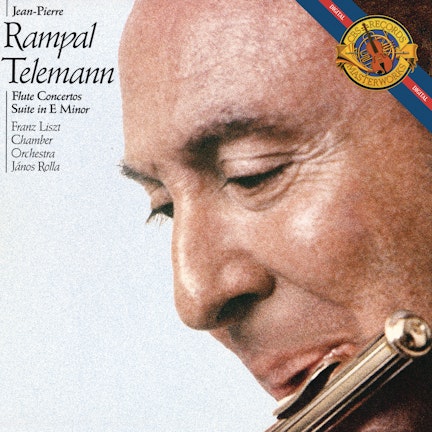
Telemannn: Ouverture Suite in E Minor & Flute Concertos
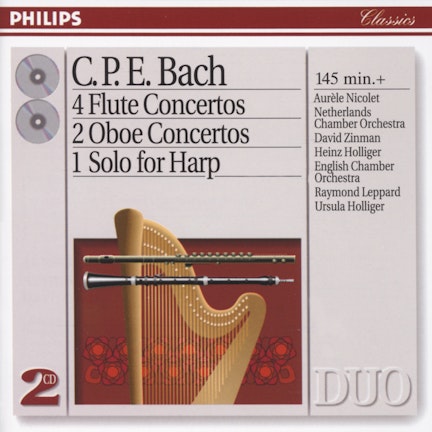
Bach, C.P.E.: 4 Flute Concertos; 2 Oboe Concertos, etc.