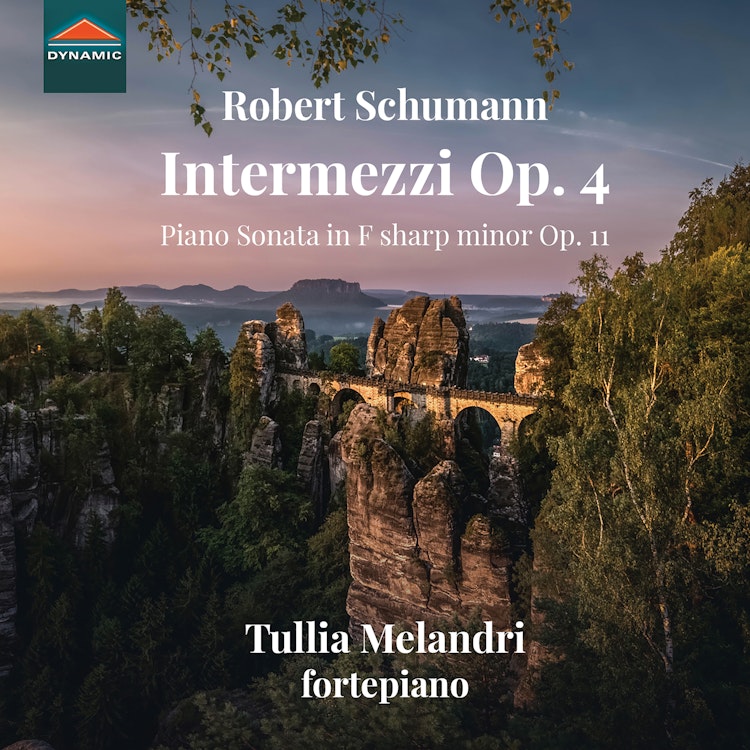
R. Schumann: Intermezzi Op. 4 & Piano Sonata in F-Sharp Minor, Op. 11
7/12/2019, 10 Tracks, 55:21
Featuring
Tullia Melandri
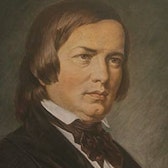
Robert Schumann
Did you know?
1/7
Compositional Technique
Schumann's Intermezzi Op. 4 use techniques of quotation, fragments, and metamorphosis of poetry into music, with a more polyphonic texture and ample forms than his earlier Papillons.
Composer Biography
Robert Schumann's career as a pianist ended in 1832 due to paralysis in the middle finger of his right hand, leading him to focus on composition.
Historical Context
Clara Wieck (later Clara Schumann) performed Schumann's Sonata Op. 11 for Felix Mendelssohn and Frédéric Chopin, whom Schumann met for the first time on one such occasion.
Interpretation
The Simon fortepiano, with its dark yet transparent sound and reactive mechanics, is considered ideal for interpreting Schumann's compositions from the 1830s.
Composition History
Schumann's Piano Sonata in F sharp minor Op. 11 is dedicated to Clara Wieck (later Clara Schumann), who was also the implicit inspirer of the work.
Instruments
The fortepiano used for this recording is by Joseph Simon, a Viennese maker from around 1830 who learned from and followed the models of the prestigious builder Conrad Graf.
Compositional Technique
The unifying motif of Schumann's Piano Sonata in F sharp minor Op. 11 is the descending fifth, which appears in various movements and recalls themes associated with Clara Wieck.
You might also enjoy...
Schumann: Kreisleriana, Op. 16 / Piano Sonata No. 3 / Toccata in C Major
Schumann: Piano Works Vol. 6
Schumann: Études symphoniques, Toccata & Carnaval
Schumann, R.: Carnaval / Faschingsschwank Aus Wien / 3 Fantasiestücke
Schumann: Kinderszenen / Fantasy / Liszt: Sonata in B Minor