Richard Strauss himself provided a detailed program for 'Tod und Verklärung', describing a dying man's dreams, pain, reflection on his life, and the soul's transfiguration after death.
Composition History
Strauss's first opera, 'Guntram', was a spectacular failure in 1894, but he married the singer Pauline von Ahna, to whom he was engaged on the morning of the premiere, soon after.
Critical Reception
The Gothenburg Symphony's 2015 performances of 'Ein Heldenleben' with Kent Nagano were highly acclaimed by critics, with one reviewer noting the orchestra's 'unified and vigorous sound'.
Notable Performances
Richard Strauss's works have been a mainstay of the Gothenburg Symphony's repertoire since its first season in 1905-1906, with 'Don Juan' being played then.
Compositional Technique
In 'Ein Heldenleben', Strauss portrays his adversaries, interpreted as music critics, with a motif in parallel fifths (strictly forbidden in counterpoint) in the bass trombone and bass tuba.
Performer Biography
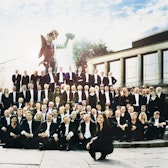
The Gothenburg Symphony, the National Orchestra of Sweden, was founded in 1905 and was called 'one of the world's most formidable orchestras' by The Guardian.
Composer Biography
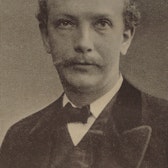
Richard Strauss, the composer, was 34 years old when he wrote the symphonic poem 'Ein Heldenleben' in 1898, at the end of his time as Kapellmeister in Weimar and Munich.
You might also enjoy...
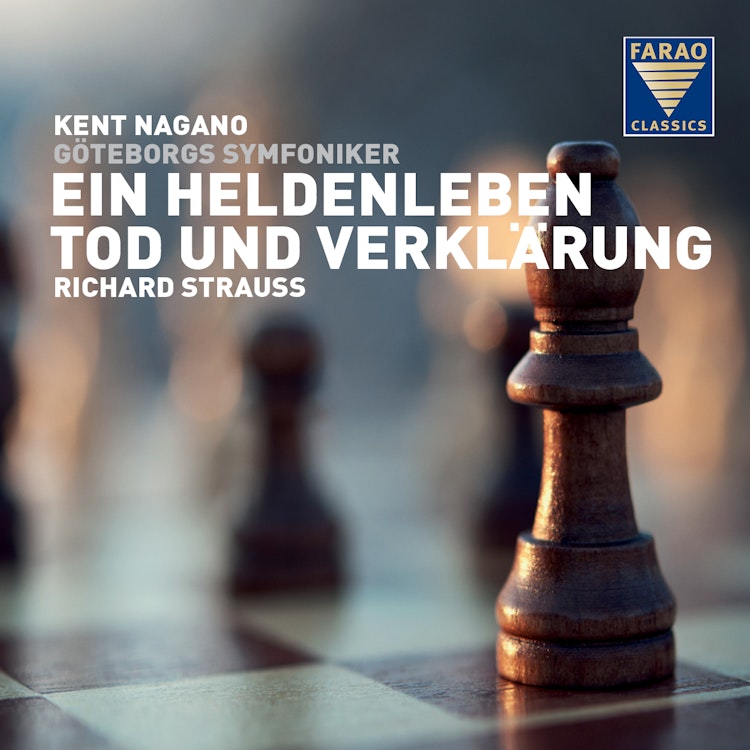
Richard Strauss: Ein Heldenleben; Tod und Verklärung
Strauss, R.: Also sprach Zarathustra
Richard Strauss: Aus Italien; Don Juan
Richard Strauss: An Alpine Symphony, Op. 64
Strauss, R.: Don Juan / Till Eulenspiegel / Also Sprach Zarathustra
Richard Strauss: Don Juan & Ein Heldenleben (Live)
Strauss, R.: Don Juan / Till Eulenspiegels Lustige Streiche / Tod Und Verklarung
Strauss: Also sprach Zarathustra, Op. 30, TrV 176 & Tod und Verklärung, Op. 24, TrV 158
Richard Strauss: Don Quixote (Fruhbeck)
Live In Berlin 2012
Strauss, Richard: Eine Alpensinfonie & Don Juan
Strauss: Ein Heldenleben and Till Eulenspiegel
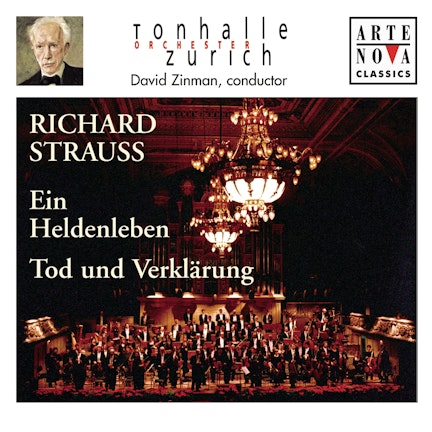
Richard Strauss: Ein Heldenleben; Tod und Verklärung