R. Strauss: Eine Alpensinfonie & Der Bürger als Edelmann & Metamorphosen
5/8/2026, 32 Tracks, 1:47:30
Featuring
Rudolf Kempe
Münchner Philharmoniker
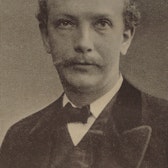
Richard Strauss
Did you know?
1/7
Critical Reception
A year before his death, Strauss noted that 'An Alpine Symphony' had 'always been undervalued by the intelligentsia, but it also sounds too good for them'.
Compositional Technique
Nine bars before the end of 'Metamorphosen', the double basses quote the funeral march from Beethoven's 'Eroica' Symphony, with Strauss adding 'In memoriam!' to the score.
Composer Biography
Richard Strauss, the composer, had a villa built in Garmisch in 1907/08, allowing him to view the Zugspitze and Wetterstein mountains while composing.
Compositional Technique
In 'An Alpine Symphony', Strauss uses a large orchestra including 64 strings, quadruple woodwind, 20 horns (8 on stage, 12 offstage), four trumpets, four trombones, two bass tubas, four harps, organ, celesta, and a vast percussion section.
Composition History
Strauss's 'Metamorphosen' was composed under the immediate impact of the devastating destruction of World War II, with his sketchbook entries mourning the bombing of Munich and other German cities.
Composer's Artistic Vision
Strauss initially planned to call his 'Alpine Symphony' 'The Antichrist', inspired by Friedrich Nietzsche's writings, viewing the mountain ascent as a symbol of human aspiration and cleansing through one's own powers.
Composition History
Strauss's 'An Alpine Symphony' was inspired by a challenging mountain hike he took as a 15-year-old in August 1879, where he was caught in a thunderstorm.
You might also enjoy...
Strauss: Sinfonia Domestica, Op. 53 & Der Rosenkavalier Waltz Suite
Strauss: Ein Heldenleben, Don Quixote etc
Richard Strauss- Don Juan, Till Eulenspiegel, Walzer, Metamorphosen
Rudolf Kempe conducts Bartók & Strauss
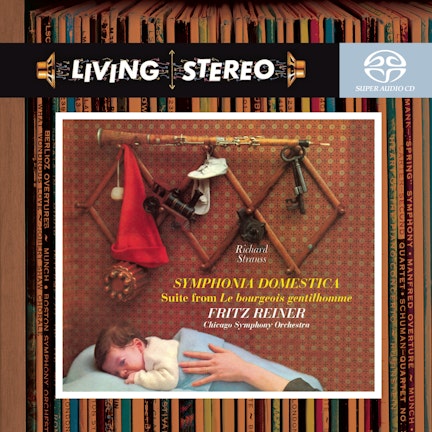
Strauss: Symphonia domestica; Suite from Le Bourgeois gentilhomme
Stravinsky: Firebird Suite - Tchaikovsky: Romeo and Juliet (Remastered)
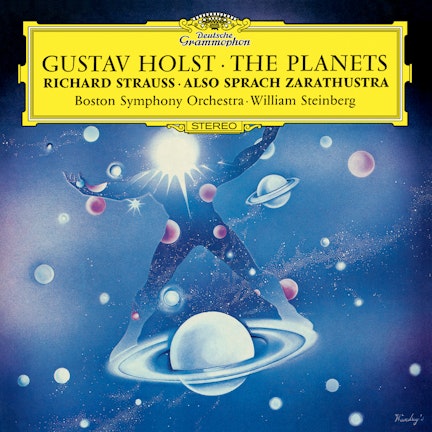
Strauss, R.: Also sprach Zarathustra / Holst: The Planets
Strauss, R.: Also sprach Zarathustra / Holst: The Planets
R. Strauss: Tone Poems
Strauss: Der Rosenkavalier - Suite & Till Eulenspiegels lustige Streiche
Bernstein Favorites: Twentieth Century
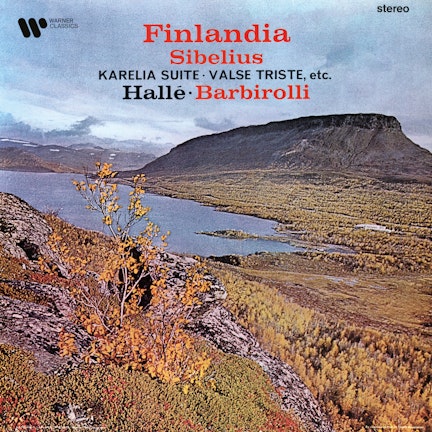
Sibelius: Great Tone Poems. Finlandia, Karelia Suite, Valse triste...