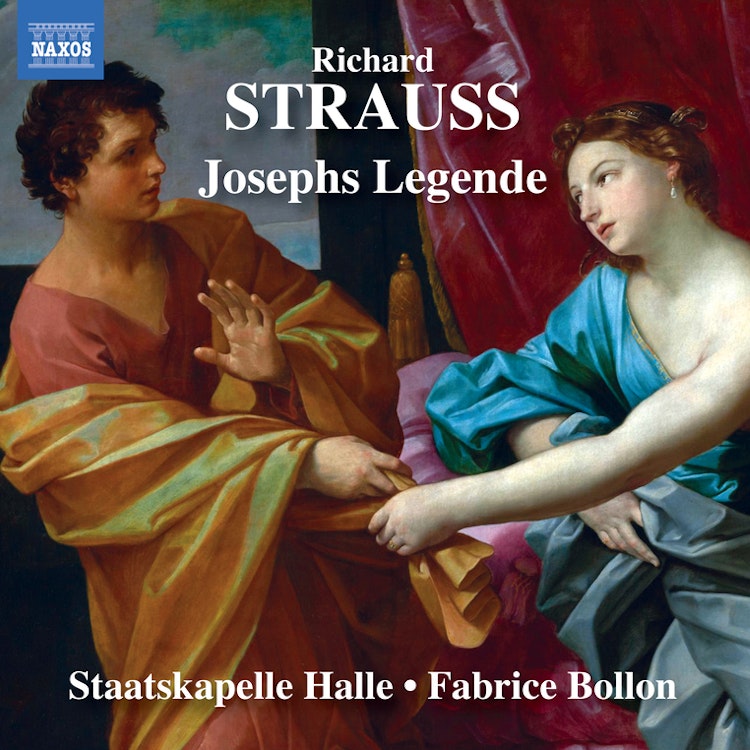
The score for Josephs Legende requires a massive orchestra, including four flutes, a heckelphone, six horns, four trumpets, six timpani, a large percussion array, celesta, four harps, piano, off-stage organ, and 64 string players.
Composer's Artistic Vision
Richard Strauss intended Josephs Legende to 'rejuvenate' the dance, aiming for a 'purely inspirational form' dedicated to 'absolute beauty,' rather than merely rhythmic or paraphrased action.
Critical Reception
After its premiere, Josephs Legende languished due to World War I, but major revivals in 1922 in Vienna and a subsequent production in Munich helped re-establish it in major theatre repertoires.
Composition History
Richard Strauss's ballet Josephs Legende debuted in Paris in May 1914 with a team of famous names, including producer Sergey Diaghilev and choreographer Michel Fokine.
Composition History
The creation of Josephs Legende was marked by behind-the-scenes drama, including a break between producer Diaghilev and choreographer Nijinsky, and disagreements between the librettists and composer about the work's meaning.
Compositional Technique
Richard Strauss reused material from an earlier pantomime, Der Insel Kythere, and a 'Dance Legend' sketch for Josephs Legende, which was not initially well-received by his librettists.
Composer Biography
Composer Richard Strauss initially accepted the libretto for Josephs Legende with enthusiasm but later found the character of Joseph boring to set to music.
You might also enjoy...
Tchaikovsky: Swan Lake, Op. 20
Stravinsky: The Rite of Spring; Petrouchka
Tchaikovsky: Swan Lake
Prokofiev: The Tale of the Stone Flower, Op. 118
The Rite of Spring, K015 Pt. 2 "The Sacrifice": III. Glorification of the Chosen One
Offenbach, Rosenthal: Gaîté parisienne
The Nutcracker, Op. 71, TH 14
Tschaikowski: Dornröschen (Highlights)
Tchaikovsky: Swan Lake, Op. 20
Tchaikovsky: Swan Lake, Op. 20 - Adam: Giselle - Meyerbeer: Les patineurs (Exerpts)