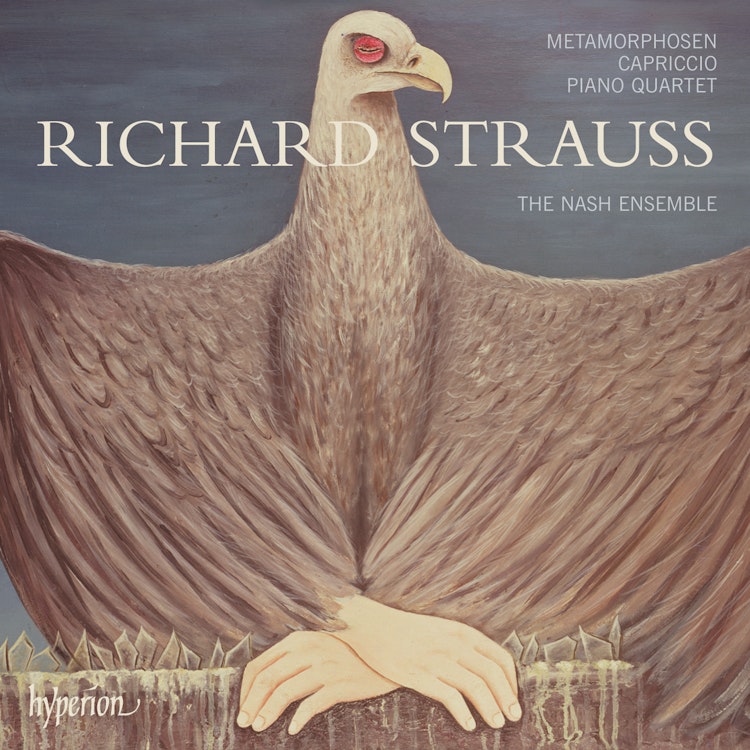
R. Strauss: Metamorphosen, Capriccio & Piano Quartet
1/26/2024, 6 Tracks, 1:17:31
Featuring
Marianne Thorsen
Malin Broman
Lawrence Power
Philip Dukes
Paul Watkins
Pierre Doumenge
Duncan McTier
Ian Brown
Nash Ensemble
Richard Strauss
Did you know?
1/7
Compositional Technique
The title "Metamorphosen" is not musical; Strauss used the term after re-reading Goethe, who applied it to his own spiritual development.
Historical Context
The premiere of the string sextet from Strauss's opera "Capriccio" took place at a private gathering in the house of Vienna's Nazi Gauleiter Baldur von Schirach, a gesture Strauss made for the protection of his son and part-Jewish wife.
Composition History
Strauss's Piano Quartet in C minor, Op. 13, was completed on New Year's Day 1885 and won a prize from the Berlin Tonkünstler Verein for a piano quartet.
Performer Biography
The Nash Ensemble, a British chamber group, has commissioned over 118 new works and performed more than 255 new works, contributing significantly to the recognition and promotion of leading composers.
Composition History
Richard Strauss began writing a work for strings in spring 1944, which later became "Metamorphosen," after receiving a request from Swiss musician and patron Paul Sacher.
Compositional Technique
At the end of "Metamorphosen," Strauss quotes the main theme of the Marcia funebre from Beethoven's "Eroica" Symphony, inscribing "In Memoriam" in the score.
Historical Context
Strauss wrote the closing pages of "Metamorphosen" in a state of depression over World War II and the destruction of German culture, noting in his diary the "most terrible period of mankind."
You might also enjoy...
Acceso mio cuore (Ciaconna)
Belli: Il nuovo stile
Il Nuovo Stile
Nordic Dream
Nordic Dream
Berlioz, Chopin & Others: Orchestral Works
Victoria Yagling: Works for Cello & Piano
Robert Moran: Desert of Roses; Open Veins; Ten Miles High Over Albania