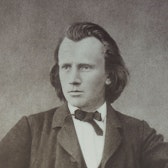
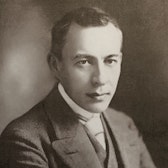
Rachmaninoff, like his compatriots Prokofiev and Shostakovich, had a great fondness for the cello, believing it reflected the 'inner voice' of the Russian soul.
Composer Biography
When asked by violinist Nathan Milstein why he didn't write for the violin, Rachmaninoff responded, 'Why write for the violin when there is the cello?'
Instruments
For his Clarinet Trio, Brahms chose the darker-toned A clarinet over the more common B-flat clarinet, likely on the advice of clarinettist Richard Mühlfeld, to create a 'cognate souls' affinity with the cello.
Composer Biography
Brahms composed his Clarinet Trio op. 114 and Clarinet Quintet op. 115 in 1891 after hearing clarinettist Richard Mühlfeld, which revitalized his creative spirit during a period of self-doubt.
Performer Biography
Pianist Yuja Wang and cellist Gautier Capuçon first performed together in 2013 at the Verbier Festival, marking the beginning of their musical partnership.
Compositional Technique
Brahms's Cello Sonata No. 1 in E minor includes a reference to Johann Sebastian Bach, borrowing its main theme from Contrapunctus XIII from Bach's The Art of Fugue.
Critical Reception
Rachmaninoff's Cello Sonata in G minor was initially criticized after its second performance in St Petersburg, with critics claiming it lacked melody and was 'detrimental to the musical education of younger generations'.
You might also enjoy...
Brahms, Schumann & Kiel: Works for Cello & Piano
Beethoven, L.: Cello Sonata No. 4 / Brahms, J.: Cello Sonata No. 2 / Schumann, R.: 5 Pieces in Folk Style