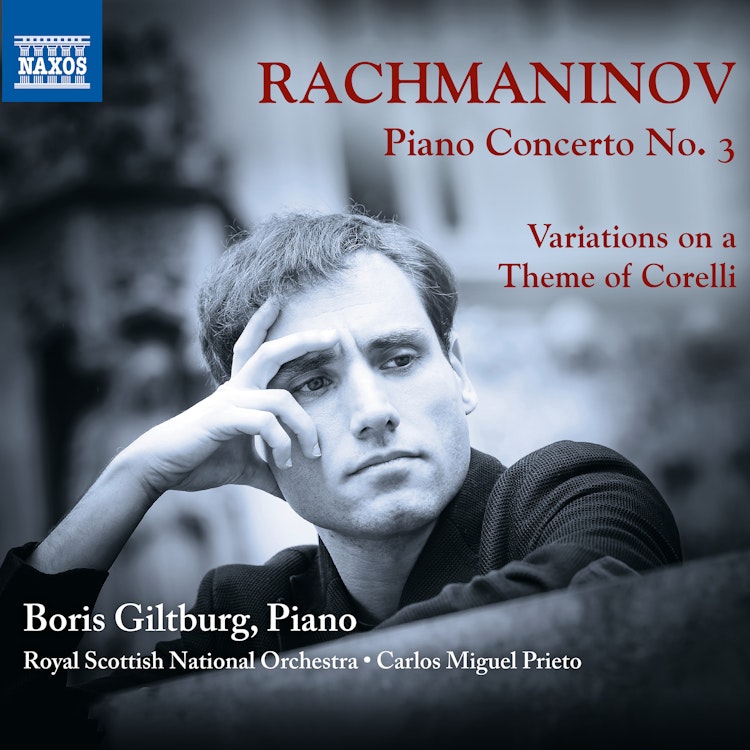
Rachmaninoff: Piano Concerto No. 3 - Variations on a Theme of Corelli
5/11/2018, 4 Tracks, 1:01:56
Featuring
Carlos Miguel Prieto
Boris Giltburg
Royal Scottish National Orchestra
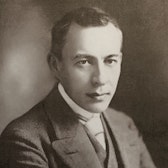
Sergei Rachmaninoff
Did you know?
1/7
Critical Reception
Despite its initial success, Rachmaninov's Piano Concerto No. 3 struggled to gain popularity due to its technical difficulty, only achieving widespread exposure in the 1930s with Vladimir Horowitz championing it.
Composition History
Rachmaninov completed his Piano Concerto No. 3 in early autumn 1909 in preparation for his first tour in the US, where he also gave its premiere.
Compositional Technique
The theme for Rachmaninov's Variations on a Theme of Corelli, Op. 42, is not by Corelli, but comes from an old dance tune called La Folia, traceable to 15th-century Portugal.
Composer's Artistic Vision
Rachmaninov himself commented that his Piano Concerto No. 3 was written 'for elephants' due to its immense technical demands.
Compositional Technique
Rachmaninov's Piano Concerto No. 3 is unified by ingeniously linked motifs, melodies, and sections between movements, creating a strong mesh of connections.
Composer Biography
Rachmaninov admitted to skipping variations in his Corelli Variations during performances based on audience coughing, once playing only ten out of twenty variations.
Notable Performances
Rachmaninov particularly treasured a repeat performance of his Piano Concerto No. 3 in January 1910, conducted by Gustav Mahler, due to Mahler's meticulous preparation.
You might also enjoy...
Best Of Classics 21: Rachmaninov
Rachmaninov: Piano Concerto No.3, Chopin Variations op.22
C. Schumann, Reinecke & R. Schumann: Works for Piano
Rachmaninov: Piano Concerto No. 2 - Corelli Variations
Rachmaninov: Piano Concerto No. 2, Op. 18 & Variations on a Theme of Corelli, Op. 42
Schmidt: Concertante Variationen & Piano Concerto, Op. 61a