The finale of Symphonic Dances features a dance of death, combining the saltarello rhythm with increasing allusions to the Dies irae, but also includes a Russian Orthodox chant celebrating the Resurrection of Christ.
Composition History
Rachmaninoff's Symphonic Dances were originally composed for two pianos and then orchestrated, with the orchestral version written as a showpiece for The Philadelphia Orchestra and conductor Eugene Ormandy.
Compositional Technique
Rachmaninoff had a lifelong fascination with the medieval Catholic funeral chant Dies irae ('Day of Wrath'), which is clearly manifested in The Bells and later in Symphonic Dances.
Compositional Technique
Rachmaninoff's choral-orchestral work, The Bells, is considered a symphony in all but name, making it one of the most original choral symphonies since Beethoven's Ninth.
Composition History
The idea for Rachmaninoff's The Bells came from a young cellist, Maria Danilova, who anonymously sent him Konstantin Balmont's Russian translation of Edgar Allan Poe's poem in 1912.
Composer Biography
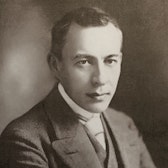
After leaving Russia, Rachmaninoff spent most of the last 25 years of his life touring as a pianist and conductor, composing only a few major works, including the Symphonic Dances.
Composer's Artistic Vision
Rachmaninoff was drawn to Edgar Allan Poe's poem 'The Bells' due to its fatalism and gradual transition from hope to bleakness, which resonated with his own temperament.
You might also enjoy...
Rachmaninov: Symphonic Dances; The Bells
Rachmaninov: Symphonic Dances / The Bells
Rachmaninoff: The Bells & Symphonic Dances
Rachmaninoff: The Bells & Symphonic Dances
Rachmaninov: Symphonic Dances; The Bells
Rachmaninoff: The Bells & Symphonic Dances
Rachmaninov: Symphonic Dances; The Bells
Rachmaninov: Bells (The) / Symphonic Dances
Sibelius: Snofrid / Cantata for the Coronation of Nicholas Ii / Rakastava