Rachmaninoff: The Piano Concertos & Paganini Rhapsody
9/1/2023, 37 Tracks, 2:28:01
Featuring
Gustavo Dudamel
Yuja Wang
Los Angeles Philharmonic
Sergei Rachmaninoff
Did you know?
1/7
Recording & Production
This album's recordings were drawn from live performances in February 2023, where Yuja Wang played all five pieces with Gustavo Dudamel and the Los Angeles Philharmonic over two weekends.
Compositional Technique
The Rhapsody on a Theme of Paganini, while a set of 24 continuous variations, also encapsulates the three-movement (fast-slow-fast) structure of concertos and includes the ominous Dies irae chant.
Composer Biography
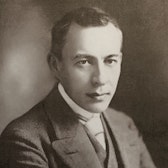
Sergei Rachmaninoff, a highly esteemed composer, graduated from the Moscow Conservatory just after his 18th birthday with the school's Great Gold Medal for his one-act opera Aleko.
Cultural Impact
The second theme of the third movement of Rachmaninoff's Piano Concerto No. 2 provided the tune for "Full Moon and Empty Arms," a major hit in 1945 for Frank Sinatra.
Composition History
Rachmaninoff's Piano Concerto No. 1, modeled on the Grieg Piano Concerto, was substantially revised in 1917, with the composer stating it was "really good now" and played "so much more easily."
Composer Biography
Deeply distressed by the chaos of the Revolution, Rachmaninoff left Russia at the end of 1917 and supported his family mainly by incessant touring, which left little time for composition.
Compositional Technique
Rachmaninoff's Piano Concerto No. 4, completed in 1926, is leaner and more concentrated, with strong suggestions of George Gershwin and Paul Whiteman jazz in its second movement.
You might also enjoy...
Tchaikovsky: Piano Concerto No. 1 in B-Flat Minor
Tchaikovsky: Piano Concerto No. 1 in B-Flat Minor, Op. 23
Price: Piano Concerto in One Movement: Andantino - Allegretto
Rachmaninoff: Rhapsody on a Theme of Paganini, Op. 43: Var. 18. Andante cantabile
Busoni: Piano Concerto
Furtwängler: Symphonic Concerto in B Minor
Khachaturian: Piano Concerto in D-Flat Major, Op. 38 & Bloch: Scherzo Fantasque B. 78
Reger: Klavierkonzert F-Moll
Tchaikovsky: Piano Concerto No. 1 in B-Flat Minor, Op. 23 (Remastered)